 HackerTube.runGood videos, with context.
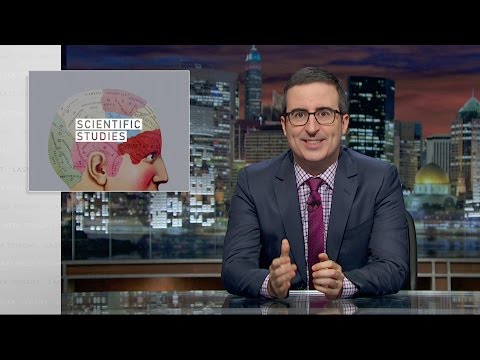
Scientific Studies: Last Week Tonight with John Oliver (HBO)
About this video
John Oliver's Last Week Tonight segment on how media outlets report incomplete or untrue findings as settled science. It covers sensational headlines, small studies and pressure on researchers.
Why it appears in the archive
HN commenters recommend it as an entertaining and sophisticated primer on reading science reporting critically.
AI-generated summary and labels from the source dataset; verify important details against the video. Source & credits.
From the Hacker News discussion
If you're saying that the standard of 'reporting' on health and science in the media at large is often conflicting and distorted into a confusing and often contradictory form there is definitely validity in that. John Oliver has a great segment called 'Scientific Studies' I'll link at the end of this post, everyone should watch this. If you are able to read the journals directly and have studied how to critically evaluate scientific studies I can guarantee that there is significantly, like thousands-fold, more consistent information. [VIDEO]
Read original comment ↗John Oliver did an awesome bit recently on scientific studies and how popular conceptions of them, especially media portrayals, completely distort the results. [VIDEO]
Read original comment ↗Generally, I think scientific studies are uninformative as news because: 1. Most people are not close enough to the science to form an informed technical opinion. 2. The scientific conclusions of most studies are impractical to implement. John Oliver's analysis is both sophisticated and entertaining: [VIDEO]
Read original comment ↗This disclaimer needs to be included in any conversation about this study. In the same week that John Oliver ranted on the dangers of misleading scientific studies[1] we see headlines like "Medical error in hospitals is the third leading cause of death in the U.S." with no mention of the fact that this study qualifies an "error" as anytime a doctor isn't a perfect healing machine. [1] - [VIDEO]
Read original comment ↗> While these errors may appear minor to some, confusing an opinion piece with research is likely to seem disturbing, if not egregious, to those in the scientific community. This is far from a new problem, and this particular piece is far from egregious, relatively speaking, considering how bad public science reporting is in general in the mass media. John Oliver had fun with it recently: [VIDEO]
Read original comment ↗And tomorrow someone will find links between depression and happiness. There are 10's of thousands of studies published a year, in which case most are completely unfounded or ridiculous. With the right test group, right questions, and correctly controlled environment, you can create almost any conclusion. "Scientific Studies: John Oliver" : [VIDEO] "Stanford News - research Scientists and Data": [LINK] "TWP - 64 Scientific Papers Restracted": [LINK]
Read original comment ↗I mean, doesn't the west have the exact same issues? p-Hacking, lack of repeat studies, focusing on experiments that will make the biggest headlines, etc. [LINK] [VIDEO]
Read original comment ↗