Choose machine learning videos for the question you have now: understand the picture, implement backpropagation, or build toward GPT. This guide separates a concept-first route from a coding route; the complete 131-video archive is below.
Which machine learning videos should you start with?
If you have never met neurons, weights or layers, begin with the visual lesson. If you know Python and remember derivatives, micrograd is the first coding stop. Already comfortable with tensors and language-model loss? Use the later course material rather than repeating the introduction.
On a small screen, swipe the comparison table sideways to see every column.
Four starting points, depending on what you can already do
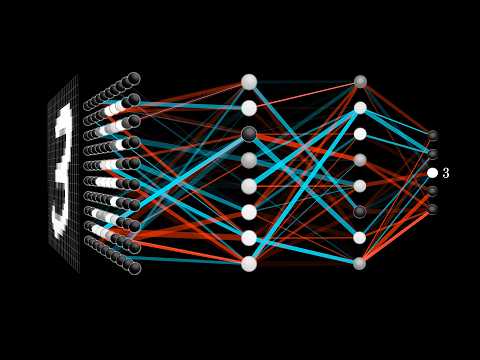
For: New to neural networks; wants a visual explanation before opening a notebook.
Choose this first if the layer diagrams themselves are unfamiliar. Its digit-recognition example gives the symbols something concrete to refer to before you meet gradients in code.
Before you start: Comfort with basic arithmetic and graphs.
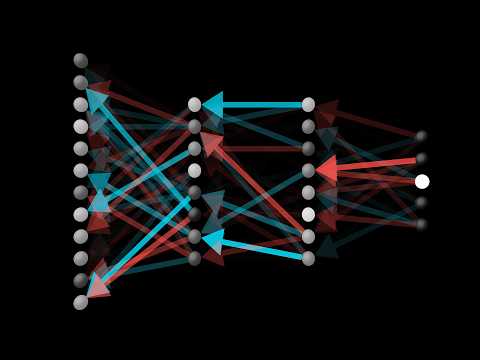
Then follow the visual treatment of backpropagation intuition and, if you want the symbols, backpropagation calculus. These are concept follow-ups, not a substitute for implementing and testing a training loop.
Write the code: micrograd toward GPT
The order follows the original Zero to Hero course. Watching time is not the time needed to complete the exercises.
For: Python programmers who want to understand what backward() computes.
Choose micrograd when autograd feels like a black box. Scalar operations make it possible to inspect one derivative at a time before tensor broadcasting adds another source of mistakes.
Before you start: Basic Python: functions, classes, arithmetic and reading a loop.
For: Python learners ready to connect a training objective to generated text.
Choose this before attention because the count-table model makes training data, sampling and likelihood visible without a Transformer hiding them. It gives you a baseline against which a more complex model has to earn its place.
Before you start: Python and basic derivatives; micrograd is a useful previous step.
The author recommends the earlier makemore lessons before GPT. These four intermediate lessons are on the original course, rather than separate pages in this archive.
For: Learners who already understand autoregressive language modeling and PyTorch tensors.
Choose this when you can already train and evaluate a small language model and want to understand why attention changes the context it can use. Starting here with no tensor background makes the mechanics harder to separate from the syntax.
Before you start: The earlier makemore lessons: the author explicitly recommends them.
After GPT, the original course continues with the GPT tokenizer. Keep tokenization separate from attention: they solve different parts of the text-generation pipeline.
How these selections were made
We compared the original course syllabus, creator descriptions and chapter lists, the lecture notebooks, and 3Blue1Brown’s written lesson. The recommendations above are editorial judgments about fit and sequence, rather than a rewording of archive scores. Our readiness checks are suggested practice, not certificates of mastery.
The 131 entries below come from the October 31, 2026 HackerTube snapshot. They are not an exhaustive list of machine learning videos, and the wider archive has not all received the review used for these four selections.
All 131 machine learning videos in the archive
Original snapshot order; AI summaries and labels remain separate from the viewing guides above.
 HackerTube.runGood videos, with context.