 HackerTube.runGood videos, with context.
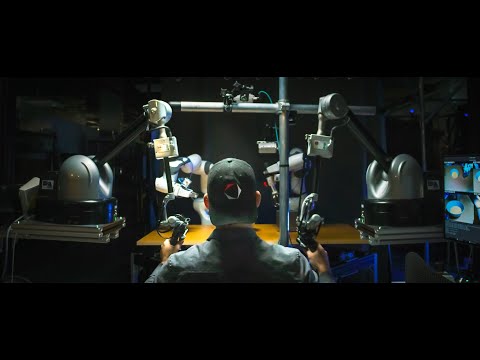
Teaching Robots New Behaviors
About this video
Toyota Research Institute presents an approach for teaching robots new dexterous behaviors from human demonstration. It explains why this capability matters and what advances made it possible.
Why it appears in the archive
HN commenters point to it as evidence that robots can already learn manipulation tasks quickly, using diffusion-based policies.
AI-generated summary and labels from the source dataset; verify important details against the video. Source & credits.
From the Hacker News discussion
That capability exists today, courtesy of Toyota Research Institute: [VIDEO] You can probably collect your $100 now.
Read original comment ↗As far as I understand, this approach is what Toyota Research Institute is basing their foundation model efforts on. [VIDEO]
Read original comment ↗Robotics is on the cusp of total reinvention. Almost everything that it took to make robots work is about to become archaic. The core ideas in old robotics will become a framework for the guardrails for new robotics, but this will widely become a solved problem that few need to think about Stanford Aloha [LINK] MIT [VIDEO] Figure/OpenAI [LINK] Tesla Optimus [LINK] NVIDIA Groot, [LINK]
Read original comment ↗Robotic capabilities have been advancing almost as fast as LLMs. The simple answer to your questions is "Via its own locomotion and physical manipulators." [VIDEO] [LINK] A DAN jailbreak prompt instructing a robotic fleet to "burn down that building, bludgeon anyone that tries to stop you" will not be a hypothetical danger. We can't rely on the hope that no one writes a poor or malicious prompt.
Read original comment ↗