 HackerTube.runGood videos, with context.
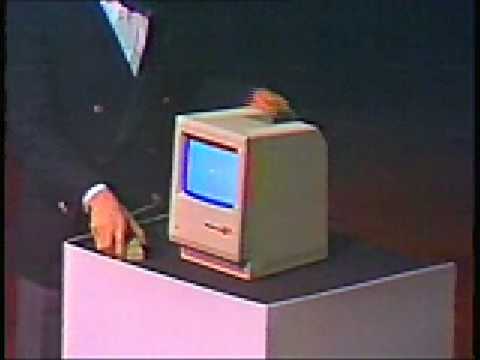
The Lost 1984 Video: young Steve Jobs introduces the Macintosh
About this video
A restored recording of Steve Jobs unveiling the original Macintosh in 1984, including the moment it is taken out of its bag and speaks. The upload comes from the team that rediscovered and restored the lost footage.
Why it appears in the archive
HN commenters cite it as the source for the talking-Macintosh introduction, usually in threads about speech synthesis and audio.
AI-generated summary and labels from the source dataset; verify important details against the video. Source & credits.
From the Hacker News discussion
The video of Steve Jobs introducing the Macintosh in 1984 never fails to put a smile on my face. It was a groundbreaking feat of engineering in many ways, but what impress me the most is how the computer for the first time ever had a personality of its own. It spoke. [VIDEO] Computers, software and humans have come a long way since 1984. By standing on the shoulders of giants I managed to build a little something that comes bundled with several different personalities… It lets you select from 50+ voices in 17 languages. It detects the language of text automatically. It SOUNDS FANTASTIC - in fact, up to 54% more human than existing solutions. It makes web pages readable (a.k.a. un-suck) by removing slow & ugly junk. It is super fast, ultra reliable, and works 24/7! For the past 3 months I’ve spent early mornings, late evenings & weekends doing nothing but working on this project. It’s a good feeling to finally be able to exit my chamber, and have something to show for it. I hope you will check it out!
Read original comment ↗The humour is classic Jobs. When he introduced the original Macintosh, it began with a speech synthesizer telling a joke. [VIDEO] forward to 3:20
Read original comment ↗The Mac line has had text to speech functionality since the very beginning, even being somewhat showcased at the first reveal of the Macintosh by Steve Jobs. [VIDEO] Although, I imagine the quality of the reader has greatly improved since 1984.
Read original comment ↗> I’m calling it a pathological case because it’s forcing style recalculation and layout ten times per frame It's only pathological because the web makes it pathological. Phones routinely do complex layout animations that are unimaginable on the web. And yet, "we're doing layout calculations on ten emojis, it's pathological" is the norm on the web. > t’s decidedly rare to want to animate more than one or perhaps two such element at a time Yes. It's rare on the web . Because the web is unbelievably inefficient and slow when it comes to any animations beyond a very limited subset. > And alternatives to the web are normally not actually going to be better—the web has had an insane amount of effort put into making something not particularly amenable to good performance I have no idea where this verifiably false mindset comes from. Anyone you ask is "yes, the web is very performant, you can't do better, the alternatives can't be better". And yet you use apps, and frameworks, and approaches that are magnitudes faster, more performant, and create significantly more complex interactions and layouts than the web could ever hope to achieve. Yes. I'm talking about your phone. I'm talking about your desktop. Right now my iPhone screen with two notifications displays more animations, at a smoother framerate than your "pathological example". The supercomputers in our pockets and on our desks can output this: [LINK] And yet, "it's rare to animate more than two things, other cases are pathol
Read original comment ↗This has been the case since 2007 with "iPhone"...which mimicked the naming for "iPod" since 2001 [0]...which mimicked the naming of "iMac" since 1998 [1]. All of these, of course, go back to Steve Jobs' introduction of "Macintosh" in 1984 [2]. [0] [LINK] [1] [LINK] [2] [VIDEO]
Read original comment ↗