 HackerTube.runGood videos, with context.
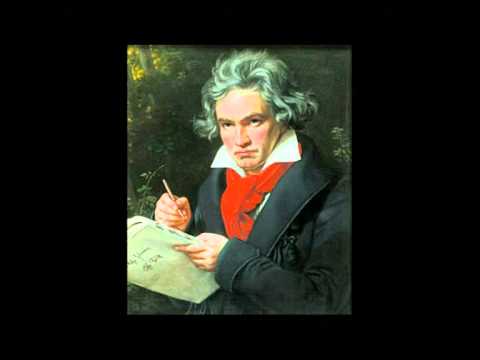
Beethoven - Moonlight Sonata (FULL)
About this video
A full piano performance of Beethoven's Piano Sonata No. 14, the Moonlight Sonata, with all three movements: Adagio sostenuto, Allegretto and Presto agitato.
Why it appears in the archive
Mostly cited as an example piece in audio and AI-music discussions, with one commenter urging people to hear the whole sonata, especially the third movement.
AI-generated summary and labels from the source dataset; verify important details against the video. Source & credits.
From the Hacker News discussion
> Beethoven: Sonata No 14 (aka Moonlight Sonata), 1st Movement Speaking of, anyone who's never heard the whole thing owes it to themselves to give it a listen. The 3rd movement is off the chain. [VIDEO]
Read original comment ↗The correct way to attack this isn't by attacking the theory. It's to gather a lot of people and ask them to press a button indicating whether the audio they hear is 16-bit or 24-bit. If the results are no better than chance, then 24-bit doesn't matter, regardless of how sound the underlying argument is. EDIT: The experiment would also be extremely difficult to design. For example, you'd need to run this test with music, not simple sounds. So the question is, which music? I think whatever is most popular at the time would be a good candidate, because if people are listening to music they hate, they won't care about the fine details of the audio. But that introduces an element of uncertainty and noise into the results which is hard to control for. Some people might deliver accurate results with [LINK] but not with [VIDEO] whereas for others it's the opposite. Or, it could be the exact opposite: Maybe you can only detect whether a sound is 24-bit when it's a simple tone, and not music. Age is also a factor. My hearing is worse than a decade ago. The headphones used by the test are another factor. If you feed 24-bit input to headphones, there's no guarantee that the speakers are performing with 24-bit resolution. In fact, this may be the source of most of the confusion in the debate. I'm not sure how you'd even check whether speakers are physically moving back and forth "at 24-bit resolution" rather than a 16-bit resolution.
Read original comment ↗I don't see a lot of progress in AudioLM compared to results from 2018: [LINK] What's more interesting and concerning - listen carefully to the first piano continuation example from AudioLM, notice the similarity of the last 7 seconds to Moonlight sonata: [VIDEO] I'm afraid we will see a lot of this with music generation models in the near future.
Read original comment ↗It definitely copied a piece of Moonlight sonata in the last 7 seconds of the first continuation sample: [VIDEO]
Read original comment ↗