 HackerTube.runGood videos, with context.
Sir Mashalot: Mind-Blowing SIX Song Country Mashup
About this video
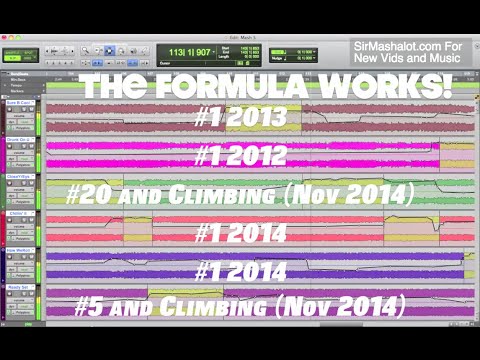
Sir Mashalot blends six formulaic pop country songs into one seamless mashup using Pro Tools. It shows how similar the songs' chords and structure are.
Why it appears in the archive
Cited as a demonstration of how samey pop music is, in threads about chord progressions and homogeneous music.
AI-generated summary and labels from the source dataset; verify important details against the video. Source & credits.
From the Hacker News discussion
That seems to be some random guy just reposting. Didn't know youtube had "blogspam" before Original mashup: [VIDEO]
Read original comment ↗Pop has actually ossified over the last ten years or so. Dubstep is more than fifteen years old now, and the Paul Van Dyk album I've just listened to sounds a lot like the last Paul Van Dyk album a few years ago. Then you get this: [LINK] and this: [VIDEO] and the now famous this: [LINK] and you start to wonder how much entropy there is to analyse. Modern classical has gone the way of modern art. It's now basically a marketing exercise. The musical experience is secondary. But then I expect creative AIs to be better at marketing too...
Read original comment ↗Musical tastes have gotten simpler in general. There remain the musicians who push the envelope, but they just aren't as popular. Its fine: the typical audience just doesn't have the ear to appreciate certain riffs. Simplicity breeds familiarity which breeds comfort. With that said, I still hear great songs on occasion, you just don't really hear it from Top 40s radio stations anymore. EDIT: I don't mean to say that modern music is bad. Its just simple. The vast vast majority of 2010s Music is I-V-vi-IV turnaround with one additional chord in there to make things a little bit different. [LINK] In the 80s and 90s, a bit of musical experimentation was done. In the 2000s and 2010, electronica is definitely pushing the envelope but your typical top 40 songs are sticking to the basics. And yes, I-V-vi-IV is interesting. [VIDEO] Its so interesting that everybody is doing it. I mean, its not "brain-dead" simple, but any person trained in music theory can hear the ridiculous amount of similarity between these riffs. But taking the pattern that literally every other country song has used and throwing just slightly different lyrics on top of it isn't original.
Read original comment ↗> "It's sort of convincingly improvisatory." I'm not sure if it was the dynamics specifically, but it was clear to me that A was human. Within 30 seconds I was so sure, I hit pause and loaded the answer to see if I was right (I was, and I'm likely the worst pianist on these forums and only a casual fan of music that falls into the 'classical' genre.) Here's[0] a fabulous physics paper that analyses the 16th notes by a studio drummer widely considered one of the best in his field. IIRC, the paper mentions he couldn't record with a click because it'd throw him off. That being said, the quality of the recording didn't suffer (his 2nd take of the track was more than good enough for the rest of the musicians to record against). So his own 'internal metronome' was more than good enough. The interesting thing wasn't that his syncopation was incompatible with a click track, but rather the skew which evolved throughout each phrase had a mathematical model that fit well against it. The study compared his recording against a corpus of user submissions of the same track and all of these drummers universally followed a similar set of dynamics. So presumably all humans (or at least, all western drummers who elected to submit their recordings) have that same skew intrinsically. It's interesting whether it's a byproduct of culture (like an accent) or a feature intrinsic to humans. In fact, that itself would be an interesting study -- compare the patterns of a traditionally schooled western j
Read original comment ↗The progression is I / III / IV / iv. "Get Free"'s verses (not chorus) is in this progression in B. "Creep" is in G. Not the most common progression, but a Google on it led to Reddit where a few other examples came up -- part of the chorus of David Bowie's "Space Oddity" ("this is ground control to Major Tom") or ELO's "Tightrope". One problem with "Creep" is that it is a simple four chord loop, unlike the above songs. Nothing wrong with a four bar chord loop, but four chord loops alone really aren't unique enough to be copyrightable (MHO). Four chord loops are a staple of basic rock and roll (garage rock and punk etc.). Because the scope of triad movement is limited in these styles, the chords you are playing (and even to some degree the melodies that come from this) have probably been done before a long time ago. Think for instance what would happen if the "12 bar blues" progression or the "doo wop progression" (I-vi-IV-V) which dominates 1950s music was placed under lock and key. Inevitably bands in four chord loop mode step on each other and produce similar sounding songs. When I played in a cover band, we played with this sort of thing to deliver "two songs at once" moments. For example, Puddle of Mudd's "She Hates Me" has the exact same chords (and pacing!) as Suicidal Tendencies' "I Saw Your Mommy" -- both are Emaj Amaj F#maj Bmaj. The chorus of the Kingsmen's "Louie Louie" and the Troggs' "Wild Thing" (I-IV-V-IV in Amaj, somewhat similar rhythm) are also similar enoug
Read original comment ↗The same applies to risk-adverse, high profit genres and/or producer heavy ones like pop country. Obviously zeitgeist and even conventions and music theory play a role. Sir Mashalot had a few videos a while ago. [VIDEO] The Blues Traveler trolling with the song Hook using the melody from Pachelbel's Canon with lyrics explicitly calling this out wasn't noticed by almost anyone. [LINK] Obviously Pop heavily samples too, E.G. Tom Tom Club Genius of Love being used by Mariah Carey's Fantasy, but it goes beyond sampling. The Rolling Stones pulling from artists like Fred McDowell and Led Zeppelin settled copyright suits on Lemon Song, Whole Lotta Love, Bring it on Home and Dazed and Confused etc... The invention of the Fairlight Sampler may have lead to groups like the Pet Shop Boys sampling dozens of other works, but as the Stones and Led Zeppelin show it wasn't unique. Well I guess the Pet Shop Boys were inspired by Grandmaster Flash, and if you listen to the original recording of West End Girls you can hear James Brown samples...not sure if that counts as "hip-hop" in that case or not. [LINK] As a bad guitar player, I can understand why even Rock and Roll pretty much grew out of artists copying R&B/Gospel artists like Sister Rosetta Tharpe, but inspiration vs copying is a fuzzy line. But basically the tooling changed, not the methods which have complex and intertwined causes, motivations, and effects.
Read original comment ↗This brilliant mashup of 6 different formulaic pop country songs would imply that there is a very low bar for some music listeners. [VIDEO]
Read original comment ↗