 HackerTube.runGood videos, with context.
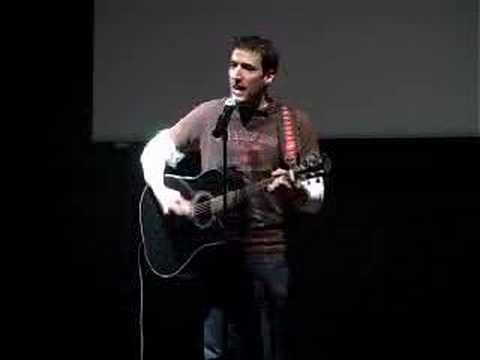
Pachelbel Rant
About this video
Comedian and cellist Rob Paravonian rants about having to play Pachelbel's Canon in D, and shows how many pop songs reuse its chord progression. It was recorded live at Penn State.
Why it appears in the archive
Brought up in threads about chord progressions and musical copyright as the funny canonical version of the idea.
AI-generated summary and labels from the source dataset; verify important details against the video. Source & credits.
From the Hacker News discussion
Related: [VIDEO] - Rob Paravorian on how so many songs have the same chord sequence as Pachelbel's Canon in D
Read original comment ↗There was a relevant and entertaining stand-up bit about this: [VIDEO] This might partly be why people love the music they heard as teens first. I hear a lot of stuff now that just seems like riffs on stuff I’ve heard before. I don’t have the nostalgia of first being exposed to it in my formative years to carry me through.
Read original comment ↗I like the live version of that better[1], and while the Axis of Awesome wins in the shear number of songs, I like Rob P's presentation[2] of the same idea more. 1: [LINK] 2: [VIDEO]
Read original comment ↗That axis of awesome video reminds me of [VIDEO] by Rob Paravonian. Also, the article reminds me of a parody video about the prolific nature of Bob Dylan: [LINK]
Read original comment ↗One problem is that you can't stop hearing it, after you know. Like Pachelbel Canon [1]. Like orange and blue scenes and posters [2] [3]. [1] [VIDEO] [2] [LINK] [3] [LINK]
Read original comment ↗> "It's sort of convincingly improvisatory." I'm not sure if it was the dynamics specifically, but it was clear to me that A was human. Within 30 seconds I was so sure, I hit pause and loaded the answer to see if I was right (I was, and I'm likely the worst pianist on these forums and only a casual fan of music that falls into the 'classical' genre.) Here's[0] a fabulous physics paper that analyses the 16th notes by a studio drummer widely considered one of the best in his field. IIRC, the paper mentions he couldn't record with a click because it'd throw him off. That being said, the quality of the recording didn't suffer (his 2nd take of the track was more than good enough for the rest of the musicians to record against). So his own 'internal metronome' was more than good enough. The interesting thing wasn't that his syncopation was incompatible with a click track, but rather the skew which evolved throughout each phrase had a mathematical model that fit well against it. The study compared his recording against a corpus of user submissions of the same track and all of these drummers universally followed a similar set of dynamics. So presumably all humans (or at least, all western drummers who elected to submit their recordings) have that same skew intrinsically. It's interesting whether it's a byproduct of culture (like an accent) or a feature intrinsic to humans. In fact, that itself would be an interesting study -- compare the patterns of a traditionally schooled western j
Read original comment ↗Which is itself meta-interesting, as it is a "style of joke" done by others (and a far as I'm concerned, often better), such as Rob Paravonian. [VIDEO]
Read original comment ↗It seems that the structure is already defined as standard pop/rock verse,verse,chorus,verse etc. And I guess it will result in people gravitating towards popular chords progression and melody. So at the end it won't be noise but a perfect Kate Perry/Shakira/Nickelback/campfire song like [VIDEO]
Read original comment ↗