 HackerTube.runGood videos, with context.
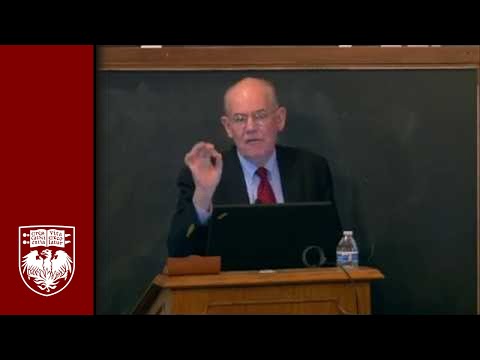
Why is Ukraine the West's Fault? Featuring John Mearsheimer
About this video
University of Chicago lecture in which John Mearsheimer argues the West, through NATO and EU expansion, bears primary responsibility for the Ukraine crisis. He also discusses how to end it and its consequences.
Why it appears in the archive
During 2022 HN threads, commenters shared it as the realist counter-perspective to understand the Russian position, though others dispute his record.
AI-generated summary and labels from the source dataset; verify important details against the video. Source & credits.
From the Hacker News discussion
I fully support the sovereignty of Ukraine, but I understand the Russian position from watching Prof. John Mearsheimer lectures, particularly this one: Why is Ukraine the West's Fault? [VIDEO] John Mearsheimer John Mearsheimer is an American political scientist and international relations scholar, who belongs to the realist school of thought. He is the R. Wendell Harrison Distinguished Service Professor at the University of Chicago. He has been described as the most influential realist of his generation. [LINK]
Read original comment ↗Here’s a good explanation: [VIDEO] In short, Russia has no intention to conquer Ukraine, but Russia has vital strategic interest there. With its actions it pursues to block eastwards expansion of NATO by wrecking the candidate states. At the same time, NATO policy is quite contradictory: Ukraine is not a vital strategic interest for USA, and thus NATO was not ready to fight for it in Donbass. At the same time they are happy to offer Article 5, which will oblige them to engage in the future conflicts in this area. Policy of open doors that NATO declares does not make much sense: by design it supposed to be a defensive alliance, not an empire, so why inviting countries which won’t really contribute to your security?
Read original comment ↗I'm not "enlightened", and you can draw your own conclusions. But they don't have to annex Ukraine, they can just mess it up and cripple its military. At the least, Putin's stated aim is "demilitarization" of Ukraine. As for the comparison with the Baltic states, I would note that this entire situation evolved over decades. Perhaps Russia would have more strongly opposed NATO membership for the Baltics had it been in a more powerful position when that was happening. Perhaps they thought that NATO-expansion would stop there. A lot has happened in the past 3 decades and some patterns are much more clear now than they were back then. One that Putin has repeatedly pointed to is that the USA is continuously supporting overthrow of governments that it doesn't like, even in the case of democratically-elected Yanukovich in Ukraine. Maybe Putin is paranoid to think the same can happen in Russia, maybe not. But I think in his view, maintaining the nuclear deterrent with the West is an existential concern, like it had been for the USSR. Having NATO missiles and bases in Ukraine is clearly a step in the wrong direction for that concern. I'm not saying that this justifies war or that Putin is right. I just think that Putin perceives himself as a cornered rat, and that from this perspective his actions make a lot more sense than just seeing him as deranged or a power-hungry demagogue. This perspective is laid out more fully in this talk by John Mearsheimer if you're interested: [VIDEO] Thi
Read original comment ↗If you want a short summary of the Russia-Ukraine conflict, I suggest this presentation/speech by John Mearsheimer - [VIDEO] - he explains it really well.
Read original comment ↗I write all of this to help others understand the issue from multiple perspectives, not to justify or defend anyone. Here’s what I’ve learned in the last week or so. There is a good lecture on YouTube called Why Ukraine is the West’s Fault. [VIDEO] Mearsheimer, a foreign policy expert of 50+ years, belongs to the “realist” school. I find his viewpoint helpful as it’s very much Machiavellian and not focused on demonizing the Other. I’m not sure how accurate his analysis is, but it seems worth looking at. [LINK] The gist is essentially this: - NATO, a Soviet-era military alliance, has continued to expand closer to Russia’s borders. Russia feels threatened by this. - Russia tried to join NATO in the early 2000s but was rebuffed. - Russia adamantly opposed including Ukraine and Georgia into NATO, but America didn’t care and pushed for it in 2008. - The US has largely driven this effort and has dragged the EU and Britain along for the ride. - The revolution/coup in 2014 (depending on which side you believe, I guess) removed more a neutral / pro-Russian government and put in a Western-focused one. This was followed by the separatism in the Donbas and Russia’s taking of Crimea. However, note that this lecture was before the recent escalation and Mearsheimer didn’t seem to think that Russia would actually launch a full-scale invasion. I would also note that he doesn't cover other important issues that are relevant to the conflict, namely: - The history of Ukraine in the last ±500 yea
Read original comment ↗John Mearscheimer said the same in 2016[1]. Stephen Cohen apparently said the same. They don't need to "take" Ukraine. They just want it as a buffer zone. The Q/A at the end of John Mearscheimers talk is actually quite interesting. Ukraine is not of vital interested to the West. If it had been they would have integrated it into NATO already. They tried the same with Georgia and right away Russia attacked Georgia. More importantly he said that the west actually needs Russia against China, because once China becomes an actual threat it will become incomparable to any previous threat. Throwing Russia into China's arms over something that is not of vital interest to the US is insane. [1] [VIDEO]
Read original comment ↗> While there are no specific or credible cyber threats to the U.S. homeland at this time, Russia’s unprovoked attack on Ukraine, which has involved cyber-attacks on Ukrainian government and critical infrastructure organizations, may impact organizations both within and beyond the region. ... That word "unprovoked" is... loaded. Here's a definition: > (of an attack, or a display of aggression or emotion) not caused by anything done or said. Stepping out of the current climate, one might characterize NATO's relentless, creeping eastward expansion right up to Russia's border as something that might provoke a response. The Monroe Doctrine defines two entire continents as the US sphere of influence. The Cuban Missile Crisis demonstrated the US commitment to nuclear war if need be to avoid the placement of hostile forced on its borders. This is not what people want to hear right now. But it is exactly what they should be hearing. This lecture might be eye opening if any of this sounds contrived or like propaganda. [VIDEO]
Read original comment ↗Thank you for your interesting line of thought. I do not know why you are downvoted - you have my upvote. I also think it is crucial to see the whole picture, and to take counter positions into account e.g. this [1] interesting talk by John Mearsheimer. It is not only Russia that lost its position in the world, the West has been playing contradictionary set of games in the last two decades as well: The events in Iraq and Afghanistan, the approach that outsourcing of production and technology for short term capital gains that was sold as an act that will bring the world together and not carry any risk in the form of a shift of industrial and military dominance. How did you come up with your position? Are you a pol.sci., or history aficionado? While I don't have any deep insight what actually drove Churchill what you described to the be an almost inquisitive research on Hitler's motives, I do think that he was able to see beyond the first level array of interests of his political class and understood the second order and long term implications for the British Empire and the European society as a whole when it came to let fascist take power on the continent. I always thought it was not morals that drove him, but a strong sense of Realpolitik and political opportunity. He had the same reasons to be wary of the terror in Russia - an antagonistic system to the British order and tradition... it was just that they were the enemy of his enemy and thus a very useful ally that turned ou
Read original comment ↗