 HackerTube.runGood videos, with context.
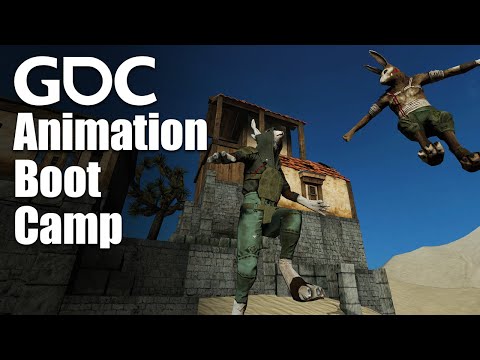
Animation Bootcamp: An Indie Approach to Procedural Animation
About this video
David Rosen of Wolfire Games explains how simple procedural techniques can produce fluid, interactive character animation from very few keyframes. Examples come from Overgrowth, Receiver and Black Shades, from his 2014 GDC session.
Why it appears in the archive
HN points to it as a concrete case of procedural animation that keeps characters responsive, often in threads about Overgrowth and game feel.
AI-generated summary and labels from the source dataset; verify important details against the video. Source & credits.
From the Hacker News discussion
> [VIDEO] David Rosen pulled off quite a few little masterpieces -- his gamedev competition entries always had fantastically unique aspects. I cannot believe "Black Shades" was almost 20 years ago! (I have no affiliation, but I am glad to see [LINK] is still alive and kicking!) Lugaru and later Overgrowth have been the outcomes of what can only be called a decades long obsession with getting the player controls just right, allowing very natural and responsive control and movement, through creating emergent behaviors from first principles, resulting in a rich and natural interaction with the environment (and other characters, see the fighting mojo), in contrast to the many, many AAA titles that just constantly break the immersion through unnatural, jarring behaviors and frustrating limitations.
Read original comment ↗Here's a video I've enjoyed of David Rosen giving a presentation at Game Developers Conference 2014 going over procedural animation used in Overgrowth. [VIDEO]
Read original comment ↗Not only that, but some of their approaches were immensely cool, they used procedural animations from just a few keyframes, have a look at this video that someone else linked a while back "Animation Bootcamp: An Indie Approach to Procedural Animation": [VIDEO]
Read original comment ↗Not the person you asked, but here's a video you might like: [VIDEO] In that example, they do the character's physics first (just a ball), then match the animation to it. The animation speed is controlled by a "surveyor wheel" approach — go to to 336s in the video for that part. So, the animation speed is derived from the physics, rather than the physics speed being derived from the animation. I wouldn't call that "IK" exactly, which would be more for things like matching the foot to individual stair steps as the character walks up them, or such. But I suppose in a broader sense it is, since you're deciding on a physical goal a-priori, then forcing the animation to match that goal.
Read original comment ↗[VIDEO] It's definitely possible to "not bash into walls" You don't always need to have bespoke animations- sometimes keyframes and realistic constraints can get you there. I think Unity is working on a framework for natural human animation.
Read original comment ↗Happy to see this! Looking forward to dive into the procedural animation system David talked about at GDC. [0] [0]: [VIDEO]
Read original comment ↗I’ve always preferred the Wolfire approach[0]: animation should “do no harm” to player control, it’s only there to add flavor, never at the cost of game responsivity [0] [VIDEO]
Read original comment ↗The keywords you're looking for are "procedural animation" and "inverse kinematics" - Overgrowth was doing this in 2009. The developer did a presentation at GDC 2014 on it: [VIDEO]
Read original comment ↗