 HackerTube.runGood videos, with context.
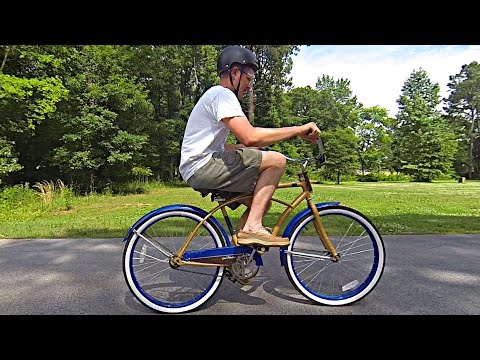
The Backwards Brain Bicycle - Smarter Every Day 133
About this video
Destin of Smarter Every Day learns to ride a bicycle whose steering is reversed, taking about eight months, and compares it with how his young son learned much faster. It illustrates knowledge versus understanding and brain plasticity in adults versus children.
Why it appears in the archive
HN cites it widely in discussions of tacit knowledge, habit, unlearning and adult versus child learning.
AI-generated summary and labels from the source dataset; verify important details against the video. Source & credits.
From the Hacker News discussion
I agree - surely adults can learn these tennis strokes, even if they are harder to pick up. There is an absolutely fascinating video about plasticity of learning between adults and children that I'd highly recommend watching [1]. A man built a "backwards bicycle", where the handlebars steer the bike in the opposite direction to what you would expect. It was almost impossible for him to ride the bike more than a few feet at a time before falling off. Finally, after 8 months of consistent practice, he could ride it relatively well. When he put his 6-year-old son on the bike (who'd been riding a normal bicycle for 3 years), he had it mastered just 2 weeks later . [1] [VIDEO]
Read original comment ↗From the excellent smartereverday youtube channel [VIDEO] Strongly recommend to watch the above video.He does an experiment on how long it takes to get comfortable by changing the handle bars.
Read original comment ↗One of my friends one day forwarded me the YouTube link to Backwards Brain Bicycle by Dustin ( [VIDEO] ) and I was so amazed by how our brains cling to the meanings of relative phenomena we've learnt in the past and how it characterizes our behavior as humans. For example, that's why we find it so hard to give up a certain habit. Our response, a replication of the concept in the form of a simple game. Let us know what you think.
Read original comment ↗Reminded me of this Smarter Every Day video, which is definitely worth a watch: [VIDEO] (The Backwards Brain Bicycle)
Read original comment ↗Cars used to have [LINK] for direction control. About forgetting how to steer, take a look at that video [VIDEO] discussion here [LINK]
Read original comment ↗Two points: 1. The opportunity costs for switching away are high. I suspect this comes into play in many areas -- say, emigrants to a new country who never develop a high functioning level of language skill (something I'll add applies just as much to English speakers abroad as those moving to English-speaking countries, if not more). And yes, there absolutely are exceptions, often many. You're highly effective in using one language. You operate functionally at the level of a young child in another. Cross training to the new language is a massive investment of effort. Adult minds lose plasticity present in children, so the task is inherently harder. Plus you've got to do everything else necessary to keep going. It's a Red Queen's race. Shifting tracks requires a very real sacrifice both in increased effort and reduced reward . It can be short-term satisficing to continue stretching out the lucrative current skill so long as possible. Situational awareness of that dead end may not dawn until late in the game as well. 2. Some skills are synergetic -- knowing one thing makes learning another easier. And yes, I see this all the time, particularly in metaphorical spaces. Thinking is I strongly suspect very much a matter of analogs , and collecting and applying appropriate analogs helps. But ingrained knowledge is ... quite different. Changing handedness, or quitting habitual behavior (drugs, smoking, alcohol, gambling) is exceptionally difficult. YouTube's "Smarter Every Day" has a
Read original comment ↗See also: [VIDEO] YouTube channel Smarter Every Day tries to ride a bike that has been hacked to reverse which way the wheel goes when the handlebars are turned, which also reveals how much bike riding skill is implicit. (I also experience the "clicking" he refers to around 6:10 when I switch between QWERTY and Dvorak layouts. It takes about 15-30 seconds to switch, even after all the years I've been doing this, and I can "feel" it slide into place. This despite the fact that I use Swype (or whatever it is spelled as) on my phone all the time, which means I stay very familiar with the QWERTY layout every day... but somehow that qualifies as a different "thing", because I always get that instantly.)
Read original comment ↗Do you remember the list of other skills? I think it's kind of like teaching someone how to ride a bike. No amount of theory and coaching will help until the connections form in their brain. Smarter everyday has an interesting video[1] on this phenomenon where he showed that it takes considerable effort to learn to ride a "backward" bike and once you do, you will forget how to ride a normal one and need to relearn it. [1] [VIDEO]
Read original comment ↗