 HackerTube.runGood videos, with context.
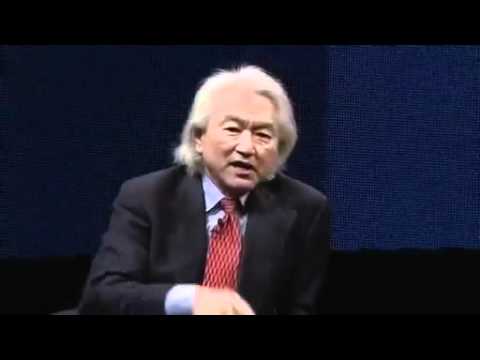
Dr. Michio Kaku America Has A Secret Weapon
About this video
A short clip of Michio Kaku arguing that America's weak education system leaves a shortage of high-skilled tech workers, so H-1B visas bring in talent. It is an excerpt of a longer panel.
Why it appears in the archive
Cited in immigration and STEM-talent debates as an authority's argument that H-1B is America's secret weapon.
AI-generated summary and labels from the source dataset; verify important details against the video. Source & credits.
From the Hacker News discussion
You're in denial, the evidence is staring you in the face, you're just not concerned. That's your prerogative, but you're probably not one of those who are going to be hurt by Bannon's misguided nationalism. As for H1-Bs, the reason Google, Facebook, Apple, Amazon, Microsoft, et al, hire them is not to lock in slaves at low wages who can't leave. Yes, there are companies that do this, but the reality is, tech companies love to hire new advanced degree graduates and a large chunk of those with master degrees and above are immigrants. If I want to hire a bunch of Phds in machine learning, optics, materials engineering, etc chances are they will be F-1 Visas and you won't see many native born in these programs in proportion to their representation in the population. This is just an uncomfortable fact. What I find interesting is, conservatives will often tout this "pipeline problem" to explain away low representation of women and minorities in STEM jobs -- as a natural outcome that nothing should be done about it. However, when it comes to native born American (primarily white) males, who have their own "pipeline problem" at the advanced degree level relative to legal immigrants, you see them crying for government policy changes to protect what they assume to be their birthright privilege. Most of the H1-Bs I have worked with, including my wife, were exceedingly talented, and hired by companies for their talent, not low wage slaves. This may not be true of consulting firms, but w
Read original comment ↗That doesn't seem to be the current administration's goal. H-1B Visa, America's secret weapon: [VIDEO]
Read original comment ↗Some people can mean a few people. So what if a few people hate engineers and HN? They are extremely valuable and look how the world has been improved because of them. Perhaps by some, you meant many? Then you should come out and say it. And even if many people hated engineers, that would still not mean engineers must change. In the 1960s the USA had a math and science crisis in schools. Russia was far ahead in engineers, possibly because the culture didn’t really put down “nerds and geeks” as much as in the USA. Blaming the victim for using precise language is perhaps missing the point. The US with its huge population desperately played catch-up in STEM until the H1B visa saved the day! It’s not just my opinion, that’s what Kaku says, among SOME, perhaps MILLIONS, of others: [VIDEO]
Read original comment ↗I always had the impression that Russians are more serious. Also Americans have developed tons of expressions for every nuance of greasing the wheels for business and relationships. Russians are more straightforward. So it is with the kids. I don’t think there was a lot of “participation trophies” and idea that “you’re a winner just for trying”. It was realistic. Women in Russia are told to look beautiful by their mothers, for example, and they are expected wear makeup and heels just going out to the store or to work. Imagine a US mother saying that. STEM in Russia and China’s schools is wayyy more advanced than USA. Not just in Moscow but every city center in every former Soviet republic. It’s one of the things the Communists really instilled early on after taking over backwaters (at the time) like Uzbekistan (along with equal rights for women, 95% literacy and electricity). Compare that to pre-revolutionary Cuba or Hawaii, for instance, that USA took over. I think right around Sputnik time and the cold war, the US had a major STEM crisis and started trying to teach math more. But really, most of our brightest students are just imported - and they’re happy to come. Gonna drop this one in there, from Dr Kaku, on a panel discussing this exact question: [VIDEO]
Read original comment ↗