 HackerTube.runGood videos, with context.
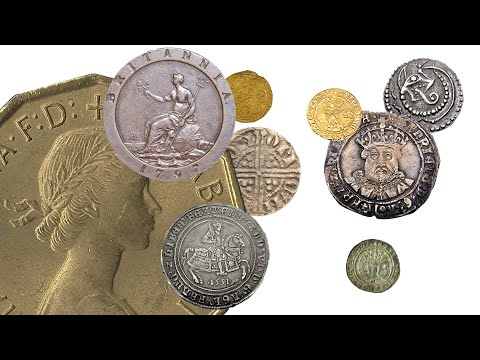
Pounds, shillings, and pence: a history of English coinage
About this video
Lindybeige gives an hour-long history of English coinage and the problems of maintaining a trustworthy currency. It ends with an explanation of why the pounds, shillings and pence system worked so well.
Why it appears in the archive
Pointed to as the best explanation of pre-decimal British money, including forgery and the guinea.
AI-generated summary and labels from the source dataset; verify important details against the video. Source & credits.
From the Hacker News discussion
A better explanation is Lindybeige's video about pre-decimal British coinage: [VIDEO] It goes into the underlying mindset behind this seemingly bizarre system. Basically: - the penny was always the fundamental unit. every denomination was defined in terms of the penny, not the pound or the shilling. It wasn't like the modern system where the fundamental unit is the pound (or dollar) and pennies (or cents) are defined as hundredths. - the system was evolved, not designed - different multiples and fractions of the penny went in and out of fashion at various times, so at any given time the system wasn't quite complicated as you might think, even though in retrospect it can be hard to keep track of every denomination from every period - the shilling (12 pence) and the pound (240 pence) stuck around and became important denominations because those are highly-composite numbers and so have lots of ways of splitting them up And this isn't stated explicitly in the video but it seems the system lost its value due to inflation, not any desire for metrication. Nobody gave a damn about pennies by the late 60s. You could very well make a new version of "old money" with modern coinage, just inflated by a factor of 100. A neo-shilling = 12 dollars, etc. Could be a fun cyberpunk worldbuilding detail.
Read original comment ↗I agree. [Time sink warning] [Fractions warning] There is an interesting video by Lindybeige that explains the old British coin system. The part about the guinea is at minute 42, and in particular explains why it was worth 21 instead of 20. [VIDEO]
Read original comment ↗I'm not an expert, but my understanding is the opposite. One reason for trading with coins rather than raw metals at this time was that minted coins coins could be expected to contain a standardised weight and metal mixture, as long as the mint managed to curtail forgeries. If someone gave you a gold coin, the imprint of the mint gave you a guarantee it actually was pure gold (rather than a cheaper mixture of gold and silver, as an example). The problem with forgeries was that forgers made their money by minting coins that weighted less or contained cheaper metals, and then passing them off as genuine. If this goes on for long enough, the coinage deteriorates, since the large amount of fake coins in circulation means that a coin could no longer be expected to contain its specific value in precious metal. Lindybeige (youtuber) talks specifically about this at around 13 minutes in this video: [VIDEO]
Read original comment ↗