 HackerTube.runGood videos, with context.
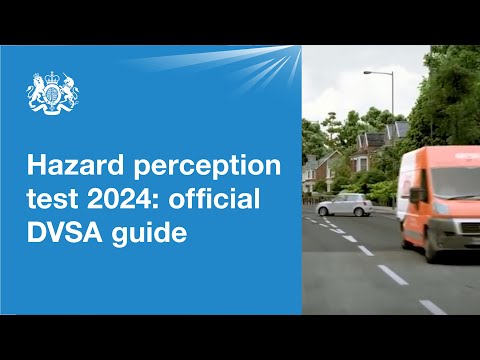
Hazard perception test 2026: official DVSA guide
About this video
The UK DVSA's one-minute guide to the hazard perception part of the driving theory test, covering when to click and how to score well.
Why it appears in the archive
Referenced as an example of a test where drivers click on developing hazards in driving video, in self-driving and driver-risk threads.
AI-generated summary and labels from the source dataset; verify important details against the video. Source & credits.
From the Hacker News discussion
Here's an interesting test case for "context-aware" machine perception: the UK's Hazard Perception test for new drivers. You sit at a computer and are shown 15 recordings of everyday road scenes, from the drivers view, and you have to click when a "developing hazard" appears. It's quite an annoying test, since what counts as a "developing hazard" is not clearly defined, but the intention is that practicing for the test trains your subconscious to scan for minor cues -- e.g., a car rapidly approaching from a side road (which will likely pull out without stopping), or two pedestrians finishing their conversation and one turning to face the street (they will likely step out into the road). [LINK] [VIDEO]
Read original comment ↗Sounds like you had a great driving instructor. Although I never had an experience like that when learning to drive, we did have to complete something in the UK called a "hazard perception test"[1] in order to get a drivers license. Basically a video version of what your instructor did for you. Until reading your comment today, I'd never really put much thought into how useful this is and how ingrained in my everyday driving it is. [1] [VIDEO]
Read original comment ↗A little towards this is included in the British driving test, like the example of the boy missing the car behind the trees. The "hazard perception test" is a video showing driving, and the student must identify (by clicking) the likely hazards. [VIDEO] (I think, I can't watch it with sound right now.)
Read original comment ↗