 HackerTube.runGood videos, with context.
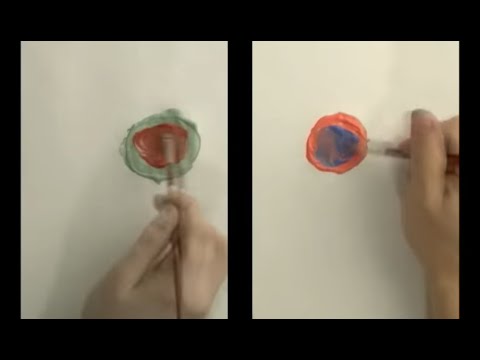
Diffie-Hellman Key Exchange
About this video
A short explainer on the history and mechanics of public key cryptography and the Diffie-Hellman key exchange. It uses a mixing-paint-colors analogy to show how two parties can agree on a shared secret in public.
Why it appears in the archive
It is the go-to beginner explanation of Diffie-Hellman, recommended because the paint analogy makes the idea click without prior cryptography knowledge.
AI-generated summary and labels from the source dataset; verify important details against the video. Source & credits.
From the Hacker News discussion
For idiots like myself, I found this video, Public key cryptography - Diffie-Hellman Key Exchange (full version), to be completely enlightening using mixed colors to explain the most basic features of a cryptography algorithm.[0] [0] [VIDEO]
Read original comment ↗Interesting, thanks for sharing (I too was curious). This is my favorite video on Diffie-Hellman key exchange which is a slightly different problem (sharing a secret, without the constraint of dividing the key): [VIDEO] (oh, hey, same channel! Guess I'll need to check out more videos from here!)
Read original comment ↗This is the only video that ever explained it concisely and clearly, IF you don't care about trying to actually implement it: [VIDEO]
Read original comment ↗This is a great pair of videos that intuitively explain Diffie-Helman key exchange and then the RSA algorithm in a way that requires no previous knowledge of cryptography: "Public key cryptography - Diffie-Hellman Key Exchange" [VIDEO] "Public Key Cryptography: RSA Encryption Algorithm" [LINK] Good coverage of the fundamentals before attempting a deeper understanding of PGP specifically.
Read original comment ↗I recommend beginning at the fundamentals. For example here's a video that walks through Diffie Hellman, so that anybody can follow, you can probably sprint through it, but by taking it slow they avoid accidentally forgetting anything important. [VIDEO] Grasping the fundamentals means that when it comes to policy decisions (e.g. in the management of certificates) you can see what the consequences of a particular decision are, rather than just hoping that whoever proposed that policy knew what they were doing. For example, I think a lot of people today use Certificate Signing Request (CSR) files without understanding them at all. But once you have a grounding in the underlying elements you can see at once what the CSR does, and why it's necessary without needing to have that spelled out separately. Or another example, understanding what was and was not risky as a result of the known weakness of SHA-1. I saw a lot of scare-mongering by security people who saw the SHA-1 weakness as somehow meaning impossible things were now likely, but it only affected an important but quite narrow type of usage, people who understood that could make better, more careful decisions without putting anybody at risk.
Read original comment ↗As others have already pointed out, this explanation focuses on the RSA key exchange, which has been deprecated. It's not recommended for use with the current line of protocols (TLS 1.2 and earlier) and it's been completely removed from TLS 1.3 (work in progress, but close to being finished). The key weakness of the RSA key exchange is that session encryption keys are transported over the network encrypted with the server's public key. When the server's private key is compromised in some way, the attacker can passively decrypt all traffic, they can also "go back in time" to decrypt all previous conversations they might have recorded and kept. For a more secure handshake approach, consider the Diffie-Hellman key exchange, which is a way for two parties to agree on a secret number (a very large number when used for encryption, of course) that third party can't discover from looking at the network traffic. It's a very simple and intuitive algorithm; there's a great video that explains it here: [VIDEO] Today, we generally use the ephemeral elliptic curve DH variant (ECDHE), which has better security characteristics and works much faster. However, DH is not sufficient, you must also authenticate the other party. Otherwise you could be negotiating your key exchange with the attacker and not the real recipient. This is where public cryptography comes in. After the key exchange, both parties use their private keys to sign the transcripts of the entire conversation up until that point
Read original comment ↗If you haven't seen it, there's a pretty neat video that outlines how public-key cryptography works using paint colors [1]. It's focused on Diffie-Hellman key exchange, but it's a great intro for beginners to be able to visualize the concepts, and I think helps provide some context before jumping right into the GPG command line. [1] [VIDEO]
Read original comment ↗Interesting explanation - thanks for sharing. I find it easier to visualise, through colours of paint, for a high-level metaphor of the DH key exchange process, which may be useful - [VIDEO]
Read original comment ↗