 HackerTube.runGood videos, with context.
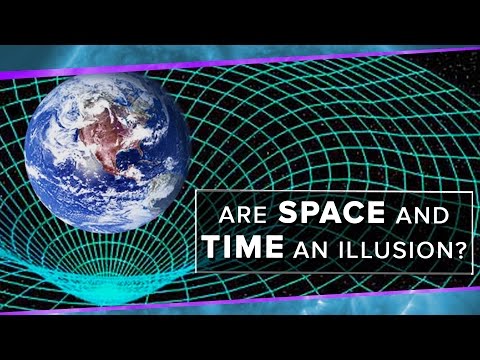
Are Space and Time An Illusion?
About this video
A PBS Space Time episode hosted by Gabe Perez-Giz on the nature of spacetime and whether space and time are fundamental. It builds up reference frames and causality in a short, dense format.
Why it appears in the archive
HN commenters point to the PBS Space Time series as a high-quality, bite-sized way to learn modern physics concepts.
AI-generated summary and labels from the source dataset; verify important details against the video. Source & credits.
From the Hacker News discussion
There's an episode of PBS Space Time about this, "The Speed of Light is NOT About Light" [1], which comes pretty close to making the same points you are making. It might be useful to watch this earlier episode, "Are Space and Time an Illusion?" [2], first. There is a later episode (or maybe a couple of them) that go into how interactions with the Higgs field make it so things with mass travel slowed than the speed of causality. To tie back to the warp drive news, they have an episode that would be a good place to start on warp drives, "Is The Alcubierre Warp Drive Possible?" [3]. There's also "Superluminal Time Travel + Time Warp Challenge Answer" [4], and "Will Wormholes Allow Fast Interstellar Travel?" [5]. A non-warp unknown physics drive that comes up a lot also got an episode, "The EM Drive: Fact or Fantasy?" [6]. There is at least one episode covering interstellar travel without using any unknown physics, "5 REAL Possibilities for Interstellar Travel" [7]. The scope of the series is basically anything vaguely connected to astronomy, cosmology, and quantum mechanics, and the episodes are all pretty short (5-12 minutes), so it is a great thing to watch when you've got a short wait for something. Here's the series home page [8], and their YouTube channel [9]. Also on the PBS streaming app, for those who like to get their physics on their big screen TVs. [1] [LINK] [2] [VIDEO] [3] [LINK] [4] [LINK] [5] [LINK] [6] [LINK] [7] [LINK] [8] [LINK] [9] [LINK]
Read original comment ↗The speed of light does not change for each given reference frame, i.e. it is constant. However, space and time are observed differently depending on a given reference frame. With regards to your second question, photons experience no time whatsoever. From the photon's perspective, they travel the universe from the point of emission to the point of absorption instantly. If you want to understand this, I highly suggest watching this video explaining reference frames: [LINK] And this playlist of the excellent PBS Space Time series: [VIDEO]
Read original comment ↗I spend pretty much every weekend watching (super dyslexic) hours and hours of "stuff" about quantum, form quantum biology to physics to astro, here are some good ones around humans and the universe. Some may not seem totally relevant but give foundational knowledge, suggest watching in order: - [VIDEO] - [LINK] - [LINK] - [LINK] - [LINK] - [LINK] - [LINK] - [LINK]
Read original comment ↗Good post, I made it a bit more legible Are Space and Time An Illusion? | Space Time | PBS Digital Studios [VIDEO] The Geometry of Causality | Space Time [LINK] The Quantum Experiment that Broke Reality | Space Time | PBS Digital Studios [LINK] Quantum Biology: An Introduction [LINK] Quantum Biology: The Hidden Nature of Nature [LINK] Consciousness: Explored and Explained [LINK] The Mind After Midnight: Where Do You Go When You Go to Sleep? [LINK] Rebooting the Cosmos: Is the Universe the Ultimate Computer? [LINK]
Read original comment ↗