 HackerTube.runGood videos, with context.
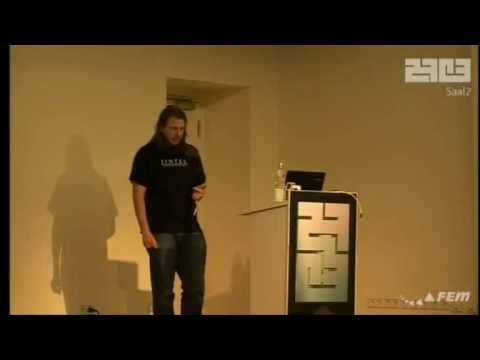
27c3 - Desktop on the Linux... (and BSD, of course) - Wolfgang Draxinger (+ Lennart Poettering)
About this video
A 27c3 talk on the Linux desktop (GNOME) by Wolfgang Draxinger, repeatedly interrupted and corrected by Lennart Poettering from the audience. The description notes much of the talk's content is disputed.
Why it appears in the archive
HN points to it as a vivid example of the clash between two philosophies of Linux desktop design, often in systemd and Wayland arguments, though many find it disrespectful.
AI-generated summary and labels from the source dataset; verify important details against the video. Source & credits.
From the Hacker News discussion
If you think that the OpenBSD has it right, why don't you use it as a desktop, too? Why aren't you running a virtual machine of Windows 7 under OpenBSD? Probably because there's no proper virtualization support in OpenBSD. Linux is complex because sometimes it has too be, not just for the sake of it. systemd (which is great in my opinion) wouldn't be possible without cgroups. Should I also mention the better multi-processor support? Regarding the desktop, I strongly recommend watching "27c3 - Desktop on the Linux... (and BSD, of course) - Wolfgang Draxinger (+ Lennart Poettering)" [1]. [1] [VIDEO]
Read original comment ↗This was an entertaining talk from CCC in 2011 on desktop Linux. 'datenwolf' was the speaker, and he starts talking about sound in Linux here. [1] He's quickly interrupted by the maintainer of PulseAudio, and this interruption continues throughout the talk. My takeaway was that if there was still this amount of confusion and misunderstanding in the community, my frustrating experiences with sound in desktop Ubuntu was not atypical of dekstop Linux users. [1] [VIDEO]
Read original comment ↗The talk that datenwolf is talking about is on YouTube at [VIDEO] I have posted that comment on the linked blog (it's awaiting moderation) without noticing that this post is several months old, so I've posted that same information here in case the author decides there's no reason approving a comment on a blog post that's several months old!
Read original comment ↗Do any of the videos involve prominent systemd contributors interrupting the presenters, like in the notorious "Desktop on the Linux" video at [VIDEO] ?
Read original comment ↗It's not that simple; explaining one reason why something would not work means re-examing many of the underlying assumptions and not many like to go deeper than that one problem at hand in isolation. The "ok, how would you do it" forces thinking about underlying issues, because the solution you propose has to account for factors you otherwise wouldn't think of. It is not a new problem either; this video is 9 years old already: [VIDEO] . It is almost one hour long, but well worth to watch to see the two different approaches to clash.
Read original comment ↗There is no split "terrible for users, great for some developers". Casual users do have issue with X; see this thread recently on HN: [LINK] . Would you consider that normal for users to handle? Of course not. Casual users having no issue with X is a lie. The fact is, that some subsytems on Linux are pile of hacks piled upon something built on assumptions that are no longer true. X11 is one of such subsystems. It is a dead end. When you are stuck in the dead end, you can either back up and once you are out, continue in your ride, or keep being stuck in the dead end. Wayland is backing out of the dead end; yes, it is short-term, high intensity pain, when you are not going forward, and even have to go back for a while. Piling new hacks on top of X11 is trying how to continue going forward without backing out of that dead-end. You will be stuck in that place for a long time, and ultimately you will move nowhere. That is long-term, low-intensity pain. Some people do not take the long term view (or do want to avoid high-intensity pain), being stuck in a place works for them (and chronic low-intensity pain is fine to them). These two approaches still clash, it is this [VIDEO] , all over again, 10 years later.
Read original comment ↗Haha, "Wolfgang Draxinger" signed 28 days ago. Check out this epic battle between Draxinger and Poettering: [VIDEO]
Read original comment ↗Great. So you managed the easy part - to scale your screen. The elephant in the room that you still ignore after several comments in this thread is, that the display manager cannot know magic variables for misc clients, it can barely tell clients apart (and it certainly doesn't know their image names, linked libraries or environment or how they were launched), and it shouldn't know, the clients should tell what resolution they are using so the display manager can adjusts their display. Wayland clients do that, X11 don't. No, you can't paper over it with some scripts. Suggestions like that always remind me this: [VIDEO]
Read original comment ↗