 HackerTube.runGood videos, with context.
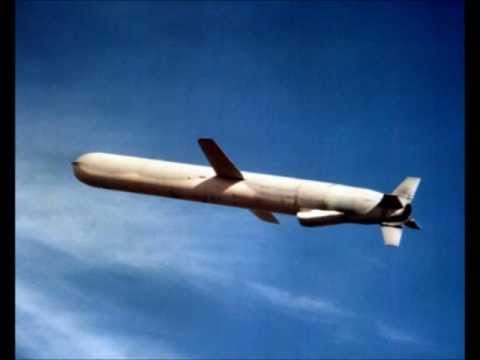
The Missile Knows Where It Is...
About this video
A short clip of the famous Hitchhiker-style circular narration of a missile guidance system explaining how it knows where it is by knowing where it isn't. It is a deadpan bit of technical-sounding absurdity about subtraction and navigation.
Why it appears in the archive
HN commenters post it as an obligatory joke reply whenever threads touch on missiles, GPS, or circular reasoning.
AI-generated summary and labels from the source dataset; verify important details against the video. Source & credits.
From the Hacker News discussion
> No matter what human action you consider, if everyone does it to everyone doing it to them, then everyone has it done to them by everyone to whom they do it I'm finding this incredibly hard to parse, yet feel like the point should be quite simple, and the paper seems to get harder from there. > if every given proposition bears it to every proposition bearing it to the given proposition, then every given proposition is borne it by every proposition the given proposition bears it to. I don't want to knock someone's efforts at this, but perhaps this is only a "plain english explanation" to someone who already understands the topic at hand? In all, it reminds me of "the missile knows where it is": [VIDEO]
Read original comment ↗In the same vein: "The missile knows where it is at all times. It knows this because it knows where it isn't. By subtracting where it is from where it isn't, or where it isn't from where it is (whichever is greater), it obtains a difference, or deviation. The guidance subsystem uses deviations to generate corrective commands to drive the missile from a position where it is to a position where it isn't, and arriving at a position where it wasn't, it now is. Consequently, the position where it is, is now the position that it wasn't, and it follows that the position that it was, is now the position that it isn't. In the event that the position that it is in is not the position that it wasn't, the system has acquired a variation, the variation being the difference between where the missile is, and where it wasn't. If variation is considered to be a significant factor, it too may be corrected by the GEA. However, the missile must also know where it was. The missile guidance computer scenario works as follows. Because a variation has modified some of the information the missile has obtained, it is not sure just where it is. However, it is sure where it isn't, within reason, and it knows where it was. It now subtracts where it should be from where it wasn't, or vice-versa, and by differentiating this from the algebraic sum of where it shouldn't be, and where it was, it is able to obtain the deviation and its variation, which is called error." Audio on yt[1] [1] [VIDEO]
Read original comment ↗My memory might be hazy, but I thought it was the other way around. INS as the primary navigation with periodic corrections from GPS. Obligatory: [VIDEO]
Read original comment ↗That excerpt reads to me much like explaining how a guidance system works on a missile: [VIDEO] > The missile knows where it is at all times. It knows this because it knows where it isn't. By subtracting where it is from where it isn't, or where it isn't from where it is (whichever is greater), it obtains a difference, or deviation. The guidance subsystem uses deviations to generate corrective commands to drive the missile from a position where it is to a position where it isn't, and arriving at a position where it wasn't, it now is. Consequently, the position where it is, is now the position that it wasn't, and it follows that the position that it was, is now the position that it isn't. Very simple words, with 3 or 4 exceptions, but it short-circuits the brain a bit if you aren't following along carefully enough.
Read original comment ↗> The submarine needs to know where it is so it can tell the missile where to go. That reminds me of "the missile knows where it is because it knows where it isn't" [VIDEO]
Read original comment ↗Reminds me of this: [VIDEO] An algorithm being explained extremely literally whie failing to communicate anything.
Read original comment ↗Ah, this happened with bullets, not missiles. Because the missile knows where it is at all times. It knows this because it knows where it isn't. By subtracting where it is from where it isn't, or where it isn't from where it is (whichever is greater), it obtains a difference, or deviation. The guidance subsystem uses deviations to generate corrective commands to drive the missile from a position where it is to a position where it isn't, and arriving at a position where it wasn't, it now is. Consequently, the position where it is, is now the position that it wasn't, and it follows that the position that it was, is now the position that it isn't. [VIDEO]
Read original comment ↗It's also important to know where you are (by knowing where you aren't): [VIDEO] There's also a version for when you need that little bit of extra motivation: [LINK]
Read original comment ↗