 HackerTube.runGood videos, with context.
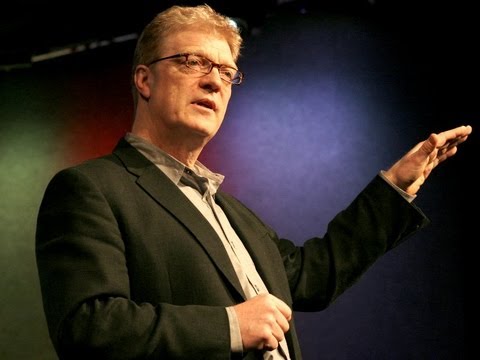
Do schools kill creativity? | Sir Ken Robinson | TED
About this video
Sir Ken Robinson argues, with humor and stories such as that of choreographer Gillian Lynne, that education systems undermine creativity and should be changed. It is one of the most viewed TED talks.
Why it appears in the archive
HN refers to it constantly in schooling debates, as a favorite talk or as the basis for arguments about creativity, though some commenters dispute its conclusions.
AI-generated summary and labels from the source dataset; verify important details against the video. Source & credits.
From the Hacker News discussion
Lots of interesting elements in your comment. > Even with more resources, as long as we're going to insist on mainstreaming students with behavioral problems or who just don't care about the educational process, outcomes for the other students in the rooms are going to be affected. The insistence on equality at all levels and all things is a problem. I know there are people reading this comment thinking "this guy is a bigot". If you are that person, please stop, calm down and think. Everyone understands that there are people who will never been competitive swimmers, basketball players or good dancers. While I am not terrible at sports, I could not become one of those three, no matter what I do. One of my kids will never be an artists. Just not interested, at all. Another cannot think about anything else. Why is it that we want to shove everyone into the same mold when it comes to intellectual capacity, IQ, etc.? Should I force one of my kids into art class and the other into engineering? No. That would be insane. We don't all have to be engineers. It would be a really sad planet if that were the case. It is not bigoted to suggest we need to allow kids to excel at what really drives them. Expose them to a range of topics, of course. Don't torture them by forcing them into a mold. Should a kid who is an artist not graduate high school if they don't pass algebra, physics and calculus? Why? I love this Ted talk: [VIDEO] The whole thing is interesting, however the story that start
Read original comment ↗Quite sad that nothing came out of [LINK] . Sir Ken Robinson has a lot to say about the education paradigm and why it should be changed, and in what ways. He appeared on TED[1][2], too, since then, and probably elsewhere as well. [1] [LINK] [2] [VIDEO]
Read original comment ↗Russ Olsen, author of Getting Closure, Eloquent Ruby and Design Patterns with Ruby, telling the story of the moon landing as a conference talk. Inspired me beyond measure and brought tears to my eyes. [LINK] —- George Lakoff’s lecture on Moral Politics. Instantaneous understanding of political language and identity politics. Incredibly important, especially today in time of extreme polarization. [LINK] —- Sir Ken Robinson: Do Schools Kill Creativity [VIDEO]
Read original comment ↗Have you noticed that most adults don't know what nine times seven is? If you ask them on the street they'll mostly either get it wrong or tell you quite rudely to go away. This is despite (and because of) a decade of grind at school. Or have you noticed that people are unable to hold a conversation in a foreign language despite years of 'study' in a classroom? Whereas an enthusiastic individual can pick up basic conversation for themselves in a matter of months. This is because coercion in education is: (1) painful, (2) prophetic, (3) it doesn't work! What happens in real life is that if somebody needs to know something because they are keen to do something else then they will learn it efficiently, 'just in time' and precisely to the extent needed. Assuming their creativity is relatively intact... [VIDEO]
Read original comment ↗Bret Victor - Inventing on principle [LINK] Alan Kay - Power of Simplicity [LINK] Steve Jobs - Marketing (unveiling Think Different) [LINK] Robert Cialdini - On Influence [LINK] Peter Thiel - On Zero to One (Notes on Starts Ups or How to Build the Future) [LINK] Naval Ravikant on Reading, Happiness, Systems for Decision Making, Habits, Honesty and More (Farnam Street podcast) [LINK] Josh Wolfe - On "This is who you are up against" podcast [LINK] Richard Feynman - Fun to Imagine [LINK] Paul Graham - Startup school (2008) [LINK] James Burke - Connections (BBC documentary) <No link> Jim Al-Khalili tells the story of the Atom (BBC) [LINK] Elon Musk's 2003 Stanford University Entrepreneurial Thought Leaders Lecture [LINK] Ken Robinson - Do schools kill creativity? [VIDEO] Paul Stamets on mycology, bioremediation and fungi- Joe Rogan Experience [LINK]
Read original comment ↗Reminded me of Ken Robinson telling the story of Gillian Lynne [1] in the most popular Ted Talk "Do schools kill creativity?" [1] [VIDEO]
Read original comment ↗Most thoughtful people seem to agree that school is bad for creativity and that real learning is led by curiosity. [VIDEO] But we still have little idea how curiosity works exactly or how an institution could be turned from an exam factory into something a bit closer to a child's bedroom and computer at home, i.e. to a place of play. For most of life we need permission to play. Parents allocate 'screen time'. At university one is effectively granted permission to do 'curiosity-led' research by an external grant agency. So what does institutionalised play look like? Perhaps something like a university. Yet how much could university life be said to be 'following the fun'? [LINK]
Read original comment ↗> High schools can't really do that, unless they are structured more like universities. That's not true. There's a very large gap between graduating 18 year old's who are only good for box-stacking, making coffee or going to college (with a lot of help in all cases) and actually graduating people who can deliver value to an employer and is culturally ready for society. Take critical thinking as an easy example. Or logic, philosophy, art, music, trades and other important areas that would benefit society if exposed during the K-12 period. I say this both as a parent and an employer. The average high school graduate is useless to me, in almost any capacity. The average college graduate isn't very far from that. This isn't new, it has been discussed here on HN many times in the past. Small to medium companies don't have the time or resources to engage in education after education. This is where this concept of wasting a year of a student's time with coursework nobody cares about is very relevant. As for my own kids, I made sure to heavily supplement their US high school education with learning that made them valuable upon graduation. A simple result from this was landing knowledge-based jobs making more than $35/hr right out of high school, when their peers where struggling with minimum wage work almost throughout their university experience. As a result of that, my oldest had a solid financial footing when he was done with university. All of this was due to education prior to c
Read original comment ↗