 HackerTube.runGood videos, with context.
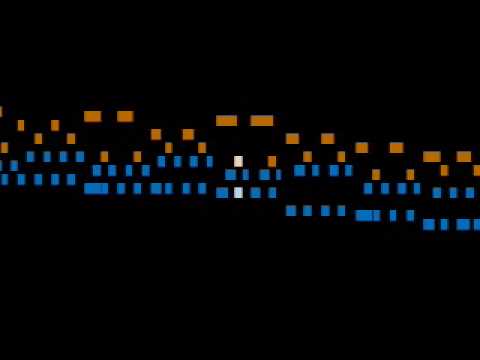
Bach, Toccata and Fugue in D minor, organ
About this video
Bach's Toccata and Fugue in D minor on organ, shown with a Music Animation Machine bar-graph score instead of traditional notation.
Why it appears in the archive
Recommended as a music visualization that makes the structure easier to follow than sheet music.
AI-generated summary and labels from the source dataset; verify important details against the video. Source & credits.
From the Hacker News discussion
Personally, I love the "Music Animation Machine" visualizations, especially of Bach. Toccata and Fugue [VIDEO] "Little" Fugue [LINK] Also enjoyable: Debussy's Clair de lune [LINK]
Read original comment ↗Cool, I like it. BTW, cool music visualization: [VIDEO] (you can't play there, but it helps o perceive music better)
Read original comment ↗For those who are not up to reading music at Bach's level, Stephen Malinowski's Musical Animation videos are eye-opening, e.g., from the Musical Offering mentioned in the article: [LINK] Toccata and Fugue in Dmin: [VIDEO] I was directed to Malinowski's work by Edward Tufte (you may be able to figure out why) and feel I should pass it on.
Read original comment ↗I have never been able to follow a score despite music lessons and playing in an orchestra (I faked it). I find such a striking difference between notation that just swims in front of my eyes: [LINK] And a bar graph which I can hear when muted: [VIDEO] I have a similar issue with algebraic notation, the signifier and signified never connects. So much misery spending hours with a mass of punctuated greek in a cs paper to discover it describes a triangle. The decryption is not even sticky, I look away for a second and it immediately re-encrypts back to soup. I don't understand why since programming languages having always felt natural and something I learned as a pre-teen just by being left alone with a BBC micro and a "type in a game" book.
Read original comment ↗