 HackerTube.runGood videos, with context.
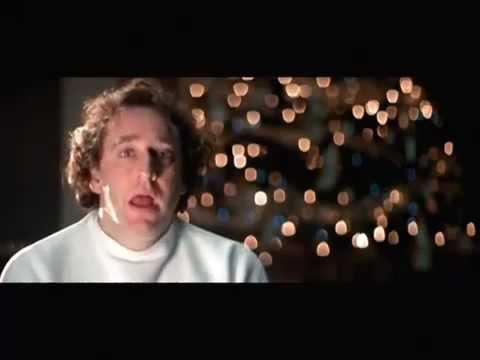
Revolution OS
About this video
Revolution OS is a feature-length documentary on the history of free software and Linux. It covers Stallman and the GNU project, Torvalds and the kernel, and Raymond and Perens on open source, starting from the era of freely shared hobbyist code.
Why it appears in the archive
Recommended as the standard documentary on the origins of GNU, the FSF and Linux.
AI-generated summary and labels from the source dataset; verify important details against the video. Source & credits.
From the Hacker News discussion
My encounter with Linux was somewhat similar but mostly from having enough with windoze. I had called a PC repair guru for the third time because of virus's on my windoze PC in 2007. He told me about a Linux but I was skeptical thinking it was more for the uber elite hackers. I tried out the Knoppix CD and then installed SuSE. I was hooked immediately. Much like the article writer's hook with being my own "superuser". For those that haven't seen Revolution OS I would highly recommend it for much of the Linux backstory. [VIDEO]
Read original comment ↗> I've personally tried a few distros of Linux, originally developed by Linus Torvalds. Is there some Intro To Linux we can point just people to in order to avoid things like this? The "GNU slash Linux" conversation is wearing pretty thin but it should be common knowledge at this point that the GNU project did 10 ten years of work so Linus could add the kernel and have it be the first completed system. Should we point to Revolution OS ( [VIDEO] )? Should we point to GNU's page about the issue ( [LINK] )? Without getting into any finger-pointing, it's just history and we should all know it.
Read original comment ↗So good to see RMS being recognized for his work. A lot of my interest in computers is due to being inspired by RMS. stallman.org is a good resource for anyone wanting to learn more. Stallman's commentary on politics is also second to none. _Revolution OS_ is a really good documentary that goes over the genesis of FSF and how Stallman played an in important role: [VIDEO]
Read original comment ↗All the FUD (Fear, Uncertainty, & Doubt) Gates' ilk produced to scare people from Freedom will bring tears to future generations' eyes. How could someone so ruthlessly oppose voluntary, community-led development (which by now we can safely say won)? Answer: Look at his company's financial investors. Relevant Revolution OS snippet: [VIDEO]
Read original comment ↗Eric Raymond's words helped change the world (Cathedral essay). He inspires me every time I read his work, sometimes I disagree, often agree, usually both but he never fails to get me thinking in new ways. IMHO Eric is one of the elders and I pay tithe to this man who I respect and learn from. I value his forthrightness, especially in these times of chilling effects - he head is firmly above the parapet and of course he takes flak. Eric's list of Open Source & Free Software contributions [LINK] For me personally, it is an honour and a priviledge to be on the same planet at the same time as Eric S Raymond - super stoked to fund his work - his work merits it. Eric on the Cathedral & Bazaar from the browser wars (when M$ nearly pwnd the net) [VIDEO]
Read original comment ↗TL;DR Microsoft tried to leverage its desktop monopoly to become a browser monopoly to a server monopoly and thus own and tax and sanitize the early web, we wuz saved by Firefox. The web freedoms we are losing today were hard won. Back when browser choice was NCSA Mosaic or Netscape , Microsoft was ignoring the web as a fad - Gates thought little of it then - sounds crazy now but in the early 90's, before access was readily available outside Universities, BBS was dominant for the public. The web was small then: registering a domain was altering a text file (no cost); SPAM didn't exist, every email was answered; all very university nice nice; ecommerce wasn't a thing. Microsoft 'awoke' to the webs potential and gave away Internet Explorer for free ( Netscape's browser cost money to buy unless you used the latest beta ) - this is what the antitrust case of win95 was about - Microsoft leveraging it's monopoly ( no Linux back then ) to aquire browser share. Why was this seen as a problem ? Because of Microsoft's strategy of embrace , extend , extinguish. It was feared Microsoft browsers would only talk 'properly' to Microsoft servers ( the server market was the 'big' money ) - thus Microsoft would dictate the web rather than Berners-Lee's democratic W3C. Everone else would be shut out of spec by dint of Microsoft end user browser monopoly leveraged from it's Desktop monopoly. This would certainly have slowed adoption as every site and every server would have to pay Microsoft's la
Read original comment ↗