 HackerTube.runGood videos, with context.
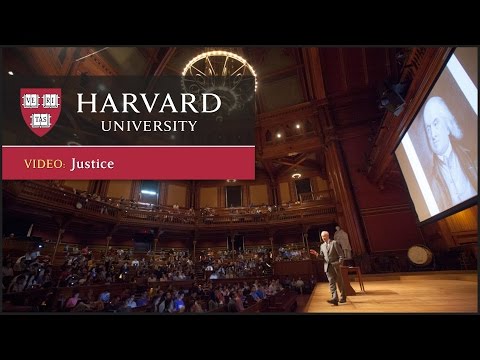
Justice: What's The Right Thing To Do? Episode 01 "THE MORAL SIDE OF MURDER"
About this video
The first episode of Michael Sandel's Harvard course on moral reasoning, opening with the trolley problem and the choice between killing one to save five. Sandel draws out student arguments and introduces utilitarian and other approaches to justice.
Why it appears in the archive
One of the most frequently recommended online lecture series on HN, praised for giving people vocabulary to examine ethical positions and for Sandel's skilled teaching.
AI-generated summary and labels from the source dataset; verify important details against the video. Source & credits.
From the Hacker News discussion
It's like asking what makes 5 greater than 5. Humans are all significant simply because they have rational minds and are rational beings. A human being cannot impose on others a value or worthiness, because we are rational beings and have independent minds. As you probably have noticed by now this is not me saying these things, it's from Immanuel Kant. I found these lectures on the topic absolutely amazing to watch: [VIDEO]
Read original comment ↗Be well versed in genetics / molecular biology! - If I had the time to finish school, I'd double in biology / math or CS. Man will that be a killer combo when that kid is 30. It feels like biotech is where computing was in the 1930's... what's to come, and how it will change the world is both frightening and exciting. On the "soft" side (whatever that means): ethics, the history of ethics, from every point of view. Two lecture series I always recommend, and feel like everyone should watch with a gun to their head (as the instructor himself says): - [VIDEO] -- Harvard course on justice / ethics. - [LINK] -- Robert Saposky (and guests) on the biology of human behavior. Literary theory. Gaining a deeper understanding of how masters of symbolism, language, and creativity think and put together their work; the history of literature; etc. will open you up to new ways of thinking just like studying pure maths or programming would. Now to invent a time machine and give myself this advice! Boy I could've used it.
Read original comment ↗It has been over a year and I haven't finished it yet, but I find it the most interesting. It's Harvard's philosophy course [1] Also, intro to comp sci by Harvard's open courseware. Without these, I might've dropped out of comp sci in my second year [2] [1] [VIDEO] [2] [LINK]
Read original comment ↗Unfortunately, no one can really articulate the full set of human values yet, especially since they are often in conflict in real-world situations. Which value(s) should be prioritized over others? How about differing values between cultures and human groups within each culture? You might have heard of the Trolley Problem. There are many and more complicated variations of that. This Harvard session on Justice (The Moral Side of Murder) is edifying and surprisingly fun to watch: [VIDEO] The problem with AGI is more acute than most other technologies because it is software-based, which makes it nigh impossible to regulate effectively, especially globally.
Read original comment ↗Came here to suggest Robert Sapolsky's class as well. I would also add Michael Sandel's Justice: What's the right thing to do? [VIDEO] great course on moral reasoning, covers different theories of justice based on ideas from Aristotle, Kant, John Stuart Mill, John Rawls and many more, extremely well presented too.
Read original comment ↗Indirectly related, if you have some time to spare follow Harvard's course in ethics! [1] Here is why: while it didn't teach me anything new (in a sense), it did give me a vocabulary to better articulate myself. Having new words to describe certain ideas means you have more analytical tools at your disposal. So you'll be able to examine your own ethical stance better. It takes some time, but instead of watching Netflix (if that's a thing you do), watch this instead! Although, The Good Place is a pretty good Netflix show sprinkling some basic ethics in there. [1] [VIDEO]
Read original comment ↗Many of these are what we call "false choices" of the sort that typically arise in hypothetical utilitarian dilemma used in rhetoric and debate. Humans are creative enough to see alternative options that obviate the dilemma, at least to some extent. See Michael Sandel on moral dilemma. Edit: FYI, Sandel's complete course "Justice" is on Youtube.[1] [1] [VIDEO]
Read original comment ↗I learned this lesson from the videos of the Harvard course on justice. The lecturer got explanations that I thought at the time were laughable, but somehow in his response he rephrased them to be reasonable and a great platform to deepen the conversation. It requires a great deal of empathy and intelligence to do that and I try my darndest to read as much sense as possible from any question directed my way. Here's an example: [VIDEO]
Read original comment ↗