 HackerTube.runGood videos, with context.
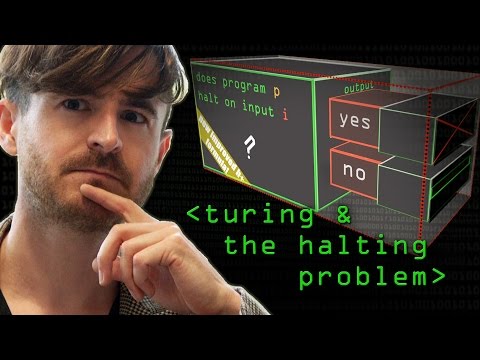
Turing & The Halting Problem - Computerphile
About this video
A Computerphile video in which Mark Jago of the University of Nottingham explains Turing's halting problem and how it led to the blueprint for the modern computer.
Why it appears in the archive
Offered as a short, clear explanation of the halting problem and its link to decidability.
AI-generated summary and labels from the source dataset; verify important details against the video. Source & credits.
From the Hacker News discussion
For one practical example, Gödel's incompleteness is directly related to decidability problems in CS. there's this glorious liar paradox machine discussed by Computerphile [0]. [0] [VIDEO]
Read original comment ↗>Like what? The halting problem is (I think?) the standard example. Here's a short video on it [VIDEO]
Read original comment ↗In my view, this isn't really a software problem. Your plan is on the right track though. We already know its neigh impossible to ensure software is bug and vuln free. We have to reckon with the fact that secure software is possible, but extremely hard and impractical to achieve with any regularity. Because of well known computer science problems such as the Halting Problem[0] and more that I am totally ignorant of, the only alternative is extremely thorough verification like happens in planes[1]. The rub is that unlike aerospace and other critical controls, we cannot define the software security problem as closely as is possible in those other critical systems. Doing so will undo the benefits of our general technology solutions. The reason I claim it is nonetheless not a software problem is: In case after case of these troubling examples of security failures, there are only a few organizational commonalities that link them all together. Time after time, there are shocking misconfigurations, corners cut, best practices eschewed, warnings ignored, processes disregarded or absent and swept under the rug. C-Suite execs, as has been well noted, opt for the checkbox-style silver-bullet-whiz-bang, because they can understand the value proposition of one-problem-one-fix and it is easy to communicate to stakeholders. They are totally ignorant to and uninterested in the details of actually providing a quality product. Their product is often not what they are selling; They are getting
Read original comment ↗no, it's all in software because you can create any smart contract and it can call any other. There is a difference in knowing after the transaction has finalized and predicting beforehand, which is when you would want to block the transaction. [VIDEO]
Read original comment ↗