 HackerTube.runGood videos, with context.
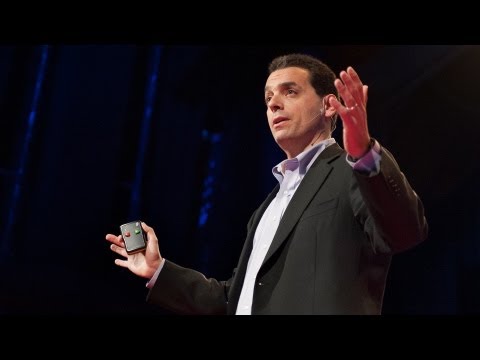
The puzzle of motivation | Dan Pink | TED
About this video
Dan Pink's TED talk argues that traditional carrot-and-stick rewards often fail for creative work, drawing on the candle problem and social science research. He points to autonomy, mastery and purpose as better motivators.
Why it appears in the archive
HN cites it whenever money as an incentive comes up, as evidence that rewards can backfire for creative white-collar work.
AI-generated summary and labels from the source dataset; verify important details against the video. Source & credits.
From the Hacker News discussion
> The idea that money is not an effective incentive to drive behavior is wishful thinking It is obviously an incentive. But I think it's not an effective one and has many morally bad side effects. I highly recommend taking a look at the work of Daniel Pink related to money as an incentive. See The Puzzle Of Motivation (~20min) [VIDEO]
Read original comment ↗I'll read them all over the next couple of hours. (I am sick in bed anyhow :)) Readings that I recommend are "The Great Jackass Fallacy" (I got my copy <$10 on Amazon) and "Drive" by Daniel Pink. There's also a Youtube/TED video that sums up "Drive" very well. [VIDEO]
Read original comment ↗Have you seen any of Daniel Pink's work on what motivates people in business? It might inspire you to focus on other incentives than just pay salary increases. [VIDEO]
Read original comment ↗The Candle Problem was used as an insightful example by Daniel Pink in his TED talk on the surprising science of motivation - [VIDEO]
Read original comment ↗Traditional incentives are often not as effective as you think: [VIDEO] The best way to have motivated employees for creative tasks is to give them a high base salary, good working conditions and hire suiting ones in the first place. For repetitive jobs the incentives might work, but these are also the jobs where you should think about automation.
Read original comment ↗I remember a TED talk that Dan Pink gave (I think this might be it[0]), in which he mentioned a company that did "20% time." Atlassian; not Google. [0] [VIDEO]
Read original comment ↗This Ted talk (includes a lot of data) shows that motivation via money hurts creative problem solving. [VIDEO]
Read original comment ↗How do you scale a more human management system when both the manager or the managee can be incompetent or malicious. I'm aware that incentives are often counterproductive or insulting for white collar workers where there are elements of creativity in the job, but I feel like to get it to work you need trust which IMO cannot be scaled to big companies like Google. FYI, I'm paraphrasing, perhaps badly "The puzzle of motivation | Dan Pink | TED". [VIDEO]
Read original comment ↗