 HackerTube.runGood videos, with context.
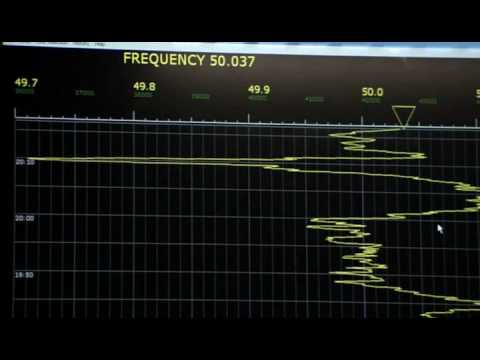
Britain peak power demand (from BBC TV series: Britain from Above)
About this video
A clip from the BBC series Britain from Above showing UK peak power demand. It shows a grid engineer preparing for the surge as millions put the kettle on when a popular show ends.
Why it appears in the archive
HN cites it as the canonical illustration of TV pickup and grid balancing, and as a must-see example of demand spikes.
AI-generated summary and labels from the source dataset; verify important details against the video. Source & credits.
From the Hacker News discussion
With the obligatory, must see, BBC Britain from Above segment in which Andrew Marr fly on the wall narrates the most challenging part of a live load engineer (UK)'s day ... <doof, doof, doof> the East Enders kettle break. * [VIDEO]
Read original comment ↗Technically yes, economically difficult for most nations, if it's approached at this level. Germany has had an interesting approach to solar, where they subsidized solar panels for homeowners. I think it is the smarter approach because you incentives individuals to go green, rather than trying to implement a top down solution. And even so, we will need to keep power plants on call for redundancy and high load purposes. There is a video about peak power usage in England which I found fascinating (though this is a rather unique case) [VIDEO]
Read original comment ↗Here's a great movie illustrating how the grid is balanced when a popular tv show ends and millions of people want a cup of hot tea: [VIDEO]
Read original comment ↗This reminds me of this YouTube video: [VIDEO] . There's a monitoring room to make sure people are ready to switch backups and reroute in case of some kind of grid failure, but also in very specific scenarios. Britain being filled with Brits, what would happen is that once the show was over, half the nation got up from the couch to turn on the kettle for a cup of tea. Those electric kettles are quite demanding, especially if millions of them turn on at the same time. So every time there was a major event, dedicated people are monitoring the grid frequency, power plants on standby and foreign contracts at the ready when needed, just to increase capacity at the right time. You can't just schedule this stuff, because if a football match runs over its allotted time, you may suddenly add power to the grid without any load, causing all kinds of problems like the grid frequency increasing and making digital clocks run ahead. There is a temporary demand of gigawatts of power that rises within five minutes and lasts until the kettles are done. The YouTube video provides an example of 600MW of power being requested from France... for the end of an episode of Eastenders. I always knew the British like their tea and that there's some kind of planning going on for events like street lights turning on, but the combination of the two is a great example of complex behaviour that's easy to overlook.
Read original comment ↗I'm skeptical about the energy claims. How much of a difference is the continuous cooling of a can of beverage going to cost when you still have to keep the refrigerator running anyway? Plus energy grids prefer a gradual and predictable energy draw than a sudden spike. Otherwise we end up with scenarios like this: [VIDEO]
Read original comment ↗There's literally a single person who adjusts the whole power grid according to second-by-second fluctuations in power which result from half the nation boiling water for tea after the most popular TV shows finish: [VIDEO]
Read original comment ↗I'd love to see a citation for that level of accuracy, I can't believe it's that good, maybe to within +/- 4 cycles? If you watch this: [VIDEO] This is about how the UK National Grid manage power availability at peak times. Over here we're running 50Hz rather than 60, but one of the key goals is to keep the grid frequency as close to 50Hz as possible. At around 2m15s into the clip they lose power from a French on-demand provider and the frequency takes a "nose-dive" to 49.6Hz causing the operator to call on backup from a Welsh hydro-station to keep up with demand. Theoretically in the UK we should get 4,320,000 cycles per day, but I suspect it's probably + or - 3 cycles. Unless of course it eventually balances out over the course of several days. Happy to be corrected though.
Read original comment ↗An example of how frequency is closely monitored before energy demand surge in Britain due to Tea Time: [VIDEO] [LINK]
Read original comment ↗