 HackerTube.runGood videos, with context.
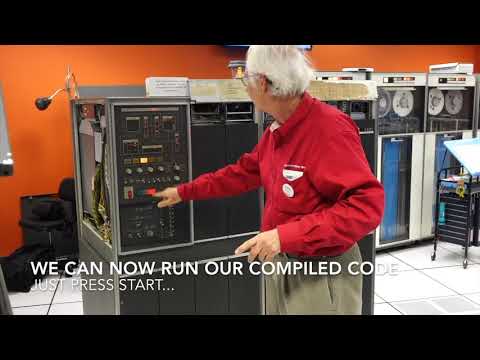
The IBM 1401 compiles and runs FORTRAN II
About this video
CuriousMarc and colleagues at the Computer History Museum try to compile and run a FORTRAN II program on a 1959 IBM 1401. The machine has only 16k of memory and a CPU not meant for scientific work, so success is far from guaranteed.
Why it appears in the archive
Passed around in computing-history threads as a charming example of vintage hardware being coaxed into running FORTRAN.
AI-generated summary and labels from the source dataset; verify important details against the video. Source & credits.
From the Hacker News discussion
If you haven't seen this already, CuriousMarc has also done this awesome series on the restoration of an original AGC - Apollo Guidance Computer last year. [LINK] And then there are real treats such as the restoration of a Teletype 33 ASR: [LINK] Or them trying to get Fortran to compile on an IBM 1401 Mainframe dated 1959. [VIDEO]
Read original comment ↗Not a link, but a video. A computer from 1959 (IBM 1401) at the Computer History Museum, compiling FORTRAN. The Youtube user has a lot of good material on restoring historical hardware. [VIDEO] Also, be sure to read the email thread linked in the video comments. It's a conversation between the restoration team and the compiler's original authors (now in their 90s). If you're in SF and you want to see the 1401 in action, the Computer History Museum used to show it to the public on Wednesdays and Saturdays. Hopefully those demos will resume once the coronavirus situation's resolved.
Read original comment ↗Cool stuff, I'm watching [The IBM 1401 compiles and runs FORTRAN II]( [VIDEO] ) and seeing that alternating green and white printer paper brought back some old memories of when dot-matrix printer paper was used as scratch paper during school days. Impressive to even see its still for sale [LINK]
Read original comment ↗Here's a video of Fortran running on the IBM 1401 at the Computer History Museum: [VIDEO] Because memory was so limited (8000 words), the Fortran compiler operates in 63 phases, where each phase consists of 150 to 300 instructions. In other words, the compiler's code was broken into chunks of 150-300 instructions, and that's all that could run in a phase. I'll also mention that memory was 8000 words and not 8192 words, because the IBM 1401 used decimal arithmetic.
Read original comment ↗On the IBM 1401, there wasn't an operating system so compiling a program was like you said: you put a stack of cards with the compiler and your program in the card reader. The compiler ran in literally 63 phases since there wasn't enough memory to do very much at one time. Compilation took about 3 minutes plus .76 seconds per statement. Your executable got punched onto a stack of cards that you could then run. Things were faster if you had a tape drive. Your source code would normally be on cards, but the compiler would be on tape. You can see a video of FORTRAN II compilation on the 1401 here: [VIDEO] Other comments described a later system such as the IBM System/360, where you had an operating system so you could use a card specifying Fortran compilation and you were set. Description of the compiler: [LINK]
Read original comment ↗