 HackerTube.runGood videos, with context.
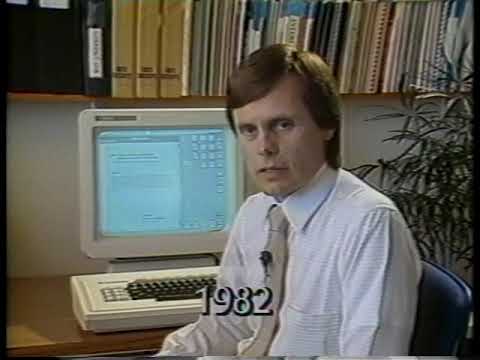
Xerox Star User Interface: An overview
About this video
A 1982 Xerox PARC film, presented at CHI '90, in which Star designers David Canfield Smith and Charles Irby give an overview of the Xerox Star interface. It shows the document-centric, icon-and-window office system.
Why it appears in the archive
Cited as the primary historical demo of the Star UI whenever its influence on the Mac and Lisa or document-centric design is discussed.
AI-generated summary and labels from the source dataset; verify important details against the video. Source & credits.
From the Hacker News discussion
A film from Xerox demonstrating the Xerox Star UI from back in the day: [VIDEO] The Star was around $50,000 per additional workstation in today's dollars, although the 'starter kit' with a workstation, file/print/mail server, and laser printer that you had to purchase first ran around $240,000 in today's dollars.
Read original comment ↗Here's video of Xerox personel demonstrating the Star 8010 UI back in the day. [VIDEO] Also, a more recent look at both the Star 8010 and the Apple Lisa. [LINK]
Read original comment ↗> The Xerox Smalltalk-80 GUI Was Weird "Weird" means only that you haven't used other similar UIs. Smalltalk 80 was a development environment. There were applications written in it with more extensive UI examples. > At first glance, this looks incredibly similar to something like the desktop of the Apple Lisa or early Mac OS. Not at all. But the Smalltalk 80 UI was only one of several that were developed. It would be better to compare the Mac OS UI to the office system from Xerox. > The first thing is that the Smalltalk environment wasn't really an operating system the same way something like Mac OS was. It’s more like an IDE that runs on bare hardware. The Mac hadn't also much of an OS. It was like running c/pascal/assembler code on bare hardware with a loader and a system library. > You can’t even move or resize a window by clicking and dragging. The "Direct manipulation interface" was made popular by the Mac. [LINK] A good idea to compare those systems is to check how early applications looked and worked. On the Mac that would have been MacPaint and MacWrite. You'll find earlier such applications for the Xerox systems, too. The Xerox Star UI: [VIDEO] [LINK]
Read original comment ↗The history of Operating System development is really interesting in that the decisions of what the atomic element of the system are (files, documents, or applications) lock all future development into a certain path, but all the choices not made then have to be somewhat retrofit into the design. For decades systems have dwelled in a kind of morass where they seem to focus on trying to implement different variants of the other two, with one of these atomic elements as the core concept. For example, the dominant atomic concept in Xerox Star was the document [1]. Documents are an abstraction just above files. A webpage is a document, but is made up of numerous files like the graphics, fonts, executable scripts, etc. Document oriented systems like Star also deemphasize applications. The system is supposed to open up the correct application(s) when you choose to interact with a document. But even with this as the core abstraction, the system still had to provide methods to work directly with files and applications. Other systems, like Plan 9, nixes, MS-DOS, CP/M, etc. focus on the file as the atomic primitive and try to build around that. But when things moved to GUIs, many of the development teams focused on the Applications. Windows 3.x famously only showed users organized collections of applications, with file management as just another application. But Windows 3.x was sitting on top of DOS which oriented itself around files. The nixes in the meanwhile forgot about documents a
Read original comment ↗Here's a head-to-head video demonstration of the Lisa and the Xerox Star 8010: [LINK] And a dedicated video on the Star: [VIDEO] .
Read original comment ↗