 HackerTube.runGood videos, with context.
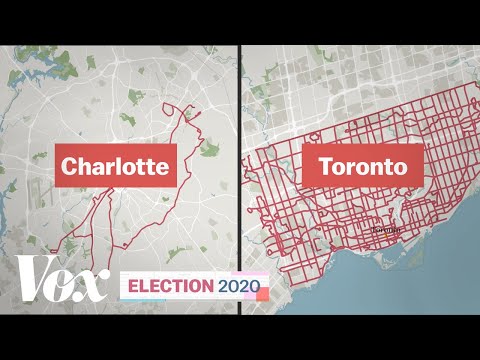
Why American public transit is so bad | 2020 Election
About this video
A Vox explainer from the 2020 election series on why American public transit is so poor. It traces the effect of the interstate highway system on cities and the resulting car dependence.
Why it appears in the archive
Linked in transit and infrastructure threads as a general explanation, with one commenter drawing the point that good transit depends on networks.
AI-generated summary and labels from the source dataset; verify important details against the video. Source & credits.
From the Hacker News discussion
> IMO streetcars in general are a pretty bad investment, as they are generally just a way of making a bus, but more expensive and stuck on rails. The value of a streetcar or a bus depends on the volume of passengers that are served. The more people, the more a streetcar (maybe) makes sense. At some point you have so many buses and so many drives (salaries, benefits, 401k/pensions) that the main cost on the line becomes people and not equipment. (More buses also need more mechanics, etc.) There is a range of average daily ridership where buses, bus rapid transit (single/double lanes), light rail, and heavy rail each make sense. * [LINK] One should also keep in mind that good transit is about networks : a random route here or there is not useful. Vox made a video outlining this: * [VIDEO] * [LINK]
Read original comment ↗But that is not a fair comparison. You need to compare moving from NY, Amsterdam,Berlin, Madrid, Shanghai, Singapore, big cities with good public transportation to any big America city [VIDEO]
Read original comment ↗I can't speak for your situation, but I can tell you that Toronto made it work. Despite the fact that the majority of the land is single-family detached housing, it seems anyone is within a 1.0 km (0.6 mile) walk of a bus stop thanks to the bus grid. See: [VIDEO] , [LINK]
Read original comment ↗