 HackerTube.runGood videos, with context.
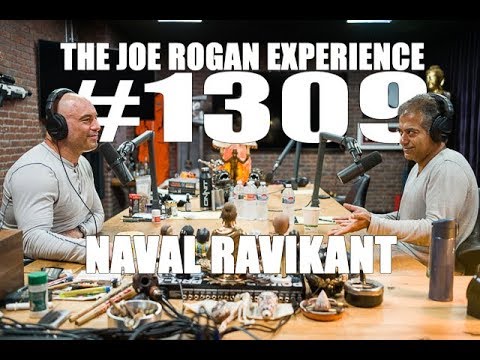
Joe Rogan Experience #1309 - Naval Ravikant
About this video
Joe Rogan interviews entrepreneur and angel investor Naval Ravikant on happiness, work, technology platforms, AI and society. Naval revisits ideas from his well-known tweets.
Why it appears in the archive
Mostly cited to support specific points Naval makes, such as platforms and free speech, rather than as a general must-watch.
AI-generated summary and labels from the source dataset; verify important details against the video. Source & credits.
From the Hacker News discussion
I personally think this is awesome. I don't wan't some git hosting startup to be the arbiter of morality for society. The engineers, designers, and PMs shouldn't have an outsized voice in society because they have a specialized useful skillset and ended up on a successful product. If these users are breaking laws, then put them out of business via the courts and sieze the assets (the repos in this case) via legal means. Otherwise why would I wan't gitlab to have anything to do with this process? The tech unicorns screwed themselves over BIG TIME, the second they stopped claiming they were just infrastructure and platforms and got into content moderation. They will now forever be a pawn of whoever has some power and has some agenda. It's an obviously unwinnable game for everyone involved besides maybe some politicians. I don't want this to become a Joe Rogan debate but Naval Ravikant got this exactly right on his Rogan Interview: [VIDEO]
Read original comment ↗I would say Naval Ravikant in Joe Rogan Experience [0]. A bit preachy (similar to Osho whom he quotes) but there is some things that are actionable and is an interesting point of view. I'm catching up on Knowledge Project (which is quite a listen) so these are not from 2019, I just happened to listen to them last year. The ones that had the most impact are: - Is Sugar Slowly Killing Us? My Conversation with Gary Taubes [1]. I got interested in this subject following the NYT expose on how sugar lobby shifted blame onto fat [2]. This builds up on that for me. - Survival of the Kindest: Dacher Keltner Reveals the New Rules of Power [3] This may be a selection bias as I had a feeling "survival of the fittest" is perhaps productive in short run but would end with species of one. Imho, the way to succeed is to collaborate and share knowledge else we may never have survived hunter gathering phase. So this episode resonated with me. A16Z's Incenting Innovation Inside Loonshots to Moonshots [4]. Having been through a significant cultural shift at my organization, the analogy of water freezing at 32F and hysteresis to explain how company culture could change dynamically or how in the same organization there are pockets that could be at two extremes on a spectrum, was quite spot on. [0] [VIDEO] [1] [LINK] [2] [LINK] [3] [LINK] [4] [LINK]
Read original comment ↗He was on the Joe Rogan Experience 2 days ago: [VIDEO] . He goes back on some of those tweets and talks about happiness, work, society, social networks, AI, robotics, energy…
Read original comment ↗Also as a strict materialist, after reading estimates from lots of different people from lots of different disciplines, and integrating and averaging everything, I think we'll have likely have human-level or above AGI around 2060 - 2080. I think it's relatively unlikely it'll happen past 2100 or before 2050. I'd even consider betting some money on it. I'm kind of coming up with these numbers out of thin air, but as much of a legend as he is, I agree Carmack's estimate seems way too optimistic to me. It's possible, but unlikely to me. That said: >The emphasis on computational power also makes no sense to me. If we had infinite compute today, what steps would you take to build AGI? Does anyone have any good ideas about that? In this interview with Lex Fridman and Greg Brockman, a co-founder of OpenAI, he says it's possible increasing the computational scale exponentially might really be enough to achieve AGIc: [LINK] . (Can't remember where he said it exactly, but I think somewhere near the middle.) He's also making a lot of estimates I find overly optimistic, with about the same time horizon as Carmack's estimate. As you say, it can be a little confusing, because both John Carmack and Greg Brockman are undoubtedly way more intelligent and experienced and knowledgeable than I am. But I think you're right and that it is a blindspot. By contrast, this JRE podcast with someone else I consider intelligent, Naval Ravikant, essentially suggests AGI is over 100 years away: [VIDEO] . I
Read original comment ↗You comment actually touches some interesting points. First, one procrastinates only if they decided they should be doing something else at this moment. I am now relaxed and interested in spending some time on HN - you can actually learn something here as well. Second, being constantly busy, optimising, and improving is a new fashion and decease. It's an unrealistic demand that causes anxiety. You also need to relax, reflect, play, do nothing. [VIDEO] Third, it also depends on what is your life goal - be happy, be super successful. I am happy to spend some time on HN, and I do not stress myself over it.
Read original comment ↗Someone a few days ago linked to this snippet of an interview with Naval Ravikant on Joe Rogan's podcast. Their lack of differentiating themselves from publishers has put them on a slippery slope [VIDEO]
Read original comment ↗