 HackerTube.runGood videos, with context.
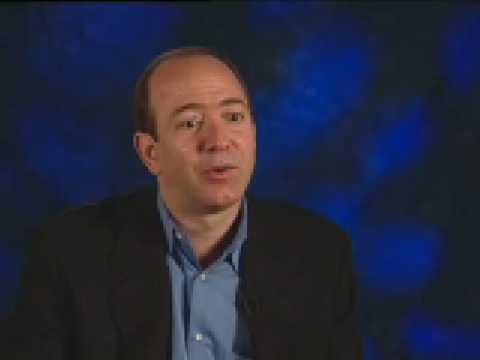
Jeff Bezos - Regret Minimization Framework
About this video
A three-minute clip of Jeff Bezos describing his Regret Minimization Framework: imagining yourself at 80 to decide whether to leave a Wall Street job to start Amazon.
Why it appears in the archive
HN commenters cite it whenever someone asks whether to quit a job or start a company, as a simple decision heuristic.
AI-generated summary and labels from the source dataset; verify important details against the video. Source & credits.
From the Hacker News discussion
Jeff Bezos has a great interview where he talks about his decision to leave his cushy Wall Street job and start a website selling books. He talks about how he used a "regret minimization framework" where he projects himself into the future and imagines which decision he would regret the least. I have used this technique multiple times myself to help with otherwise fraught or overwhelming decisions, and I think it's a great way to shift your frame of reference. Interview where he describes it here: [VIDEO]
Read original comment ↗"I have never let my schooling interfere with my education." -- Mark Twain "So I wanted to project myself forward to age 80 and say, 'Okay, now I’m looking back on my life. I want to have minimized the number of regrets I have.' I knew that when I was 80 I was not going to regret having tried this. I was not going to regret trying to participate in this thing called the Internet that I thought was going to be a really big deal. I knew that if I failed I wouldn’t regret that, but I knew the one thing I might regret is not ever having tried. I knew that that would haunt me every day, and so when I thought about it that way it was an incredibly easy decision. And I think that’s very good." -- Jeff Bezos, Regret Minimization Framework ( [VIDEO] )
Read original comment ↗Hearing Bezos's regret minimization framework was one of the things that helped to make an easier decision to leave my job to start a company (I left Amazon, ironically). Here is the original video which this quote is taken from: [VIDEO]
Read original comment ↗This question is eerily similar to my current situation: hoping to go on a 6 month sabbatical starting in 2017. My goal is to, basically, work on things that I've always dreamed of doing but haven't pursued because of the demands of everyday life. See Jeff Bezos' regret minimization framework for inspiration: [VIDEO] . Imagine yourself at 80. What would you regret not doing?
Read original comment ↗Use Jeff Bezos 'Regret Minimization Framework' to decide [1]. Basically, when you are 80, will you regret having tried and possibly failed or regret having not tried at all? Granted you aren't going to be Amazon probabilistically but it will definitely make your life more interesting and put you in control of it and fully responsible for it. Personally I'd rather try and succeed or fail on my own than just be a cog in the machine and possibly be on a ship that sinks out of my control or merely latching onto success. I'd rather be the captain whether she sinks or sails smoothly, hopefully the latter. I went fully independent six years ago, originally just planning on a year, and there have been times of awesome and times of rough waters, but she is still sailing and it has been an adventure I know I won't regret having embarked on. Three of my six years are the highest revenues/income I have had annually in my career but one was the lowest ever, prepare for more volatility if you do. If you do, my recommendation is make good habits early, cut your costs, be disciplined, aim for revenues as early as possible, work hard but work smart, be sure to take time off, and especially enjoy your successes and learn from your failures. Ship on the regular, and if you aren't, kick it in gear to go all in. [1] [VIDEO]
Read original comment ↗I think everyone overestimates their ability to influence the outcome. 85% of venture backed startups are no longer operating in 3 years. Startups are fragile critters, and those 85% presumably were larger high-aptitude and hardworking folk who all THOUGHT they'd at least make it the the "walking dead" group (which presumably makes up most of the remaining 15%). A lottery is probably a bad analogy. It's probably more like a couple of hands of blackjack. I think your first point is the winner. See Bezos' Regret Minimization Framework: [VIDEO]
Read original comment ↗From my answer on Quora ( [LINK] ) Jeff Bezos' Regret Minimization Framework: "...it really was a decision that I had to make for myself, and the framework I found which made the decision incredibly easy was what I called -- which only a nerd would call -- a "regret minimization framework." So, I wanted to project myself forward to age 80 and say, "Okay, now I'm looking back on my life. I want to have minimized the number of regrets I have." I knew that when I was 80 I was not going to regret having tried this. I was not going to regret trying to participate in this thing called the Internet that I thought was going to be a really big deal. I knew that if I failed I wouldn't regret that, but I knew the one thing I might regret is not ever having tried. I knew that that would haunt me every day, and so, when I thought about it that way it was an incredibly easy decision. And, I think that's very good. If you can project yourself out to age 80 and sort of think, "What will I think at that time?" it gets you away from some of the daily pieces of confusion. You know, I left this Wall Street firm in the middle of the year. When you do that, you walk away from your annual bonus. That's the kind of thing that in the short-term can confuse you, but if you think about the long-term then you can really make good life decisions that you won't regret later." See: [VIDEO] A big payout is definitely a large factor in jumping ship if you're arrogant enough to believe that you can attain suc
Read original comment ↗This answer is in response to a question about why I left my job. The question was deleted before I posted my reply below: --------- It came down to asking myself these questions: * Jeff Bezo's Regret Minimization Framework Q: What will I regret when I'm 80 years old? What am I going to regret more: taking a shot at a dream and failing, or never having taken a shot at all? ( [VIDEO] ) A: Taking a shot and failing. * Future Utility Framework Q: What's the realistic best case scenario end game? I.e. If I look at someone who's 15 years ahead of my in the same career path and has done a good job of getting promoted, recognized and rewarded, am I happy doing what he's doing in 15 years? A: No. * Money and risk Q: I'm 25 with 3 years of work experience at a major international bank, what's going to happen if I screw this up and waste 3 years of my life? A: I'll get a job at 28. I'll probably make less money, but 3 years of work experience isn't too bad. Q: What if you never get such a sweet job? USD 100k is a lot of money for a 25 year old! A: I don't have kids, I don't have a mortgage, I don't have debts and I do have a enough savings to tide me over for a few years. It means that I won't live with the same degree of financial freedom (e.g. watching my spending, going on fewer holidays, eating out less, etc.) but it's a price I'm prepared to pay. For most people, the last few questions are going to be the most important. Being relatively young, not having liabilities and instead h
Read original comment ↗