 HackerTube.runGood videos, with context.
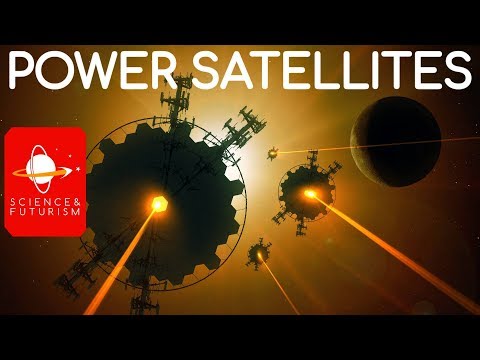
Power Satellites & Space Based Solar Power
About this video
Isaac Arthur explores space-based solar power, in which satellites beam energy down via microwaves to rectennas on Earth. He discusses feasibility, profitability and its role in spurring space colonization.
Why it appears in the archive
HN commenters recommend it as the best overview of power satellites, with pros and cons beyond the construction cost.
AI-generated summary and labels from the source dataset; verify important details against the video. Source & credits.
From the Hacker News discussion
Power satellites like this are one of the first great possible ways to put industry in space. We need early economic reasons to get there. Issac Arthur usually has the best overview of topics like this [VIDEO]
Read original comment ↗Solar panels perform 2x better in space, and also you could beam it down day or night so you don't need to worry as much about storage. [LINK] Edit: re-watching that, the economics doesn't sound great. Edit 2: a more in depth video [VIDEO]
Read original comment ↗space based solar power actually has some pretty great pros and not many cons other than construction cost [VIDEO]
Read original comment ↗> You don't have a way how to transfer power from Dyson swarm without absurdly staggering losses. Why do you need to transfer power? The point of an orbital is primarily for people to live on. A single orbital could potentially support a million or more people. Are you referring to the issue of providing power to Earth? That's... a separate issue, with different solutions. The idea of power satellites [1] has had a lot of thought. An alternative approach is to build an orbital ring [2] and hang solar power collectors off of it. You could this power directly to the ground with transmission lines. > Dyson swarm satellite would be heated up by incoming heat from Sun on one side An orbital would be heated on the side facing the Sun and radiate away heat away when not facing the Sun in the exact same way that the Moon is scorching hot when facing the Sun and 200 below zero when not. [1]: [VIDEO] [2]: [LINK]
Read original comment ↗I'll keep saying this until I'm blue in the face: solar power is the future. It is the only form of power generation that directly genreates power rather than turning a turbine. As such it has no moving parts (apart from, maybe, an array that gets tilted to face the Sun for higher efficiency but that's optional) and has no emissions. The cost of solar power has plummetted in the last 2 decades and nobody is quite sure where this will bottom out. Now obviously sometimes it's night time and sometimes it's just cloudy. You have a number of options for this, in increasing level of engineering and technological difficulty: 1. Do nothing. Just take power when it is available. This works surprisingly well for a lot of our power usage. Power usage peaks in daylight hours so solar reduces your baseload requirements. Sometimes you can simply do things when the weather doesn't permit (eg data centers). 2. Store excess power in another form. This could be batteries but it could also be things like sequestering carbon from the air into a hydrocarbon form you can later burn for power. This is carbon neutral by definition. This method currently isn't economic. In some cases that doesn't matter (eg in cold climates where current batteries aren't particularly effective). 3. Power satellites that bean down power. A solar collector in space would produce ~7 times as much power as a terrestrial collector because there's no day/night or weather interruptions nor atmospheric loss. It is technicall
Read original comment ↗