 HackerTube.runGood videos, with context.
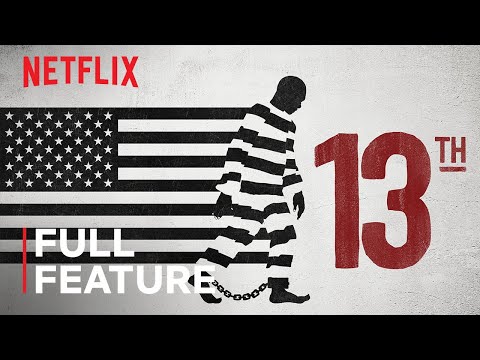
13TH | FULL FEATURE | Netflix
About this video
Ava DuVernay's Oscar-nominated documentary on how the history of racial inequality in the US, from slavery through the 13th Amendment's exception clause, drives mass incarceration. It combines archival footage with testimony from activists and scholars.
Why it appears in the archive
HN commenters strongly recommend it as a clear examination of structural racism in the criminal justice system and the war on drugs, and note it is free to watch.
AI-generated summary and labels from the source dataset; verify important details against the video. Source & credits.
From the Hacker News discussion
Instead of expecting every commenter to live up to your standard of evidence - lest the entire movement be labelled an anti-intellectual mob - why don't you go get educated yourself? Here's a movie, Thirteenth, which VERY CLEARLY defines and examines structural racism in the criminal justice system in the US, and how it evolved directly from the systems of slavery and its sequel, Jim Crow. [VIDEO] This analysis and conversation has been building for literally decades. It's like showing up for the fifth week of an algebraic geometry class and calling it 'anti-intellectual' because you can't be bothered to pick up Euclid...
Read original comment ↗There seem to be plenty of comments that are OK with private prisons. I highly recommend watching this documentary: [VIDEO] It will most likely change your mind.
Read original comment ↗This documentary is an absolute must-watch and shows how devastating the war on drugs is and was from a race perspective [VIDEO]
Read original comment ↗You're making a lot of (intentional or not) dogwhistles. So let's dive in to a few of them: > Blacks kill more blacks than any other race or ethinicity.[1] Blacks also kill more whites, than whites kill blacks in pure numbers. Indeed, let's rephrase this: races in the US continue to be relatively segregated[0]. And crimes, even violent ones, are usually committed within-community. So the meme around "black on black violence" is a bit of a distraction unless you also are concerned about "white on white" violence. And if you are, organizations like stop the violence[1] do exist to address specifically violence within the black community. So you start by stating true, but ultimately misleading claims that are often used to justify racial prejudice. Then, you justify this opinion with two videos from black people. Neither Larry Elder nor Denzel Washington is an expert on incarceration or the US justice system. Larry Elder, in fact, is a right wing political pundit, so his income relies on his viewership. This calls into question his reliability. I'd suggest you watch the documentary 13th[2] or read up on these issues from actual experts. But I'll spend some time breaking down his video: He starts by noting that white men and black men are killed by police at around the same rate. This is, again true. But this means that Black people are killed at around 5 times the rate of White people. Then he restates the whole issue of black on black crime, which we've already discussed. He th
Read original comment ↗Its not just slavery, its jim crow, segregation, black people being systematically disadvantaged through racist policies like getting higher rates on loans despite having the same risk. Also: - the New Deal excluded black people - The GI Bill excluded black people etc... Slaves built a huge part of the economy for free and americans benefit from that work for which they were not compensated, so yes there absolutely should be reparations. I think this should be done in several ways: - monetarily: by funding scholarships and other projects to remedy the injustices perpetrated and help black americans accumulate some of the generational wealth they have been denied. Although at the end of the day, no amount of money will ever compensate for the hurt, death and atrocities, its a start. - education: teaching kids at school what slavery was really like, instead of what some of the schoolbooks teach (that slavery wasn't that bad for example). Teaching kids about systemic racism that persists to this day. - policing, housing, prisons: watch 13th documentary ( [VIDEO] ) its free on netflix (edit: spelling and formatting)
Read original comment ↗This is not as simple as your argument makes it out to be. The US has a long history of imprisoning people so they can be used as slaves. Netflix has a good documentary on it: [VIDEO]
Read original comment ↗No. I think you're just not connected to those already suffering. Some people are living in hell today. [1] I think the narrative you describe comes from ubiquitous psychopathology, which affects all of us. In other words: the weight of our current systems creates a low level mental illness for all who are under it's influence and control. This weight comes from the continual stresses digitally technological society exerts on us. This is the shared reality of digital Rentier Capitalism [2]. It means the system keeps most of us fragmented and passive. But I think your narrative is dangerous. To believe more suffering has to happen, just because you didn't experience pain directly doesn't mean others' suffering isn't worthy of acting upon. All you did is reveal your privilege, which is a great first step. Next comes awareness, should you choose to accept that important mission [3] [1] [LINK] [2] [LINK] [3] [VIDEO]
Read original comment ↗Not a surprise, given 90-95% of cases end in a plea bargain [1]. Most defendants (even innocent ones) would rather give in to the threats of prosecutors and accept a guaranteed lower sentence than risk a much harsher one in trial [2]. So yeah, you have to have a really strong conviction your case will stand in court to reject a plea deal and try your odds in trial. IMO, the system is made to be fair at the surface level, but it's utterly broken when you consider second-order consequences. The incentives are tilted towards prosecutors being incentivized for putting people in jail no matter what (and jail systems profiting from it). [1] [LINK] [2] [VIDEO]
Read original comment ↗