 HackerTube.runGood videos, with context.
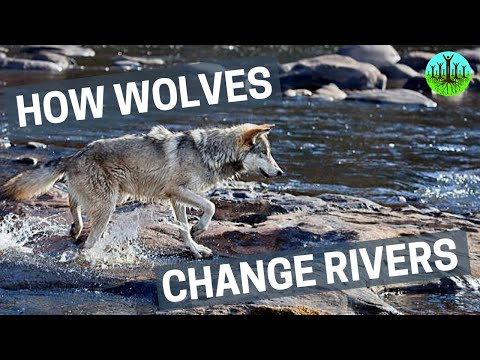
How Wolves Change Rivers
About this video
George Monbiot narrates how reintroducing wolves to Yellowstone after about 70 years set off a trophic cascade. The wolves changed deer behavior, vegetation recovered, and rivers changed course.
Why it appears in the archive
HN cites it as the go-to example of how one keystone species can reshape an entire ecosystem.
AI-generated summary and labels from the source dataset; verify important details against the video. Source & credits.
From the Hacker News discussion
In hindsight this looks like the idle ramblings of someone out of touch with reality. But in truth it's closer to the opposite - I've spent too much time analyzing the repercussions of everything because that's what programmers do. If someone ever finds this, this video sums up a lot of what I was trying to say: [VIDEO] Now multiply that by every ecosystem that has been tampered with by humans across the face of the planet and decide for yourself if our climate has been affected.
Read original comment ↗You need to learn about trophic cascades. Here's a quick intro: [VIDEO] This played out in the Pleistocene extinctions to a very significant degree, having tremendous effect on ecosystems everywhere. Here's an entire conference worth of the subject: [LINK]
Read original comment ↗I saw a pretty cool documentary on how reintroducing wolves to Yellowstone changed the ecosystem for the better. Not the one I saw but very similar: [VIDEO] More serious article: [LINK]
Read original comment ↗This could be good for Colorado. I had to watch this video [1] for my biology class. It's interesting how the wolves changed the entire ecosystem by just changing the behavior of deer (they avoided grazing near the river because that's where the wolves wanted to be). The ripple effects are fairly significant. 1 - [VIDEO]
Read original comment ↗>In what way? Because we are all completely dependent on ecosystem services provided by those species, such as erosion control (without which your country erodes away to desert), rainwater buffering (without which you experience catastrophic flooding), and transpiration (without which you lose almost all inland rainfall[1]). Loss of individual species is just the symptom. The real problem—and what this article discusses—is wholesale destruction of wilderness. Don't imagine that just a handful of species can provide these services either. Since ecosystems are complex adaptive systems, a particular species' role is almost always subtle and interconnected. See: the services provided by wolves in Yellowstone, which were never fully understood until they were removed and then re-introduced[2]. So why is wilderness important? Fundamentally, wilderness is arranged (and so, it functions) in completely different ways than human-tended landscapes. Now it's obvious that a suburb is different from a forest, but what's less obvious is that the way wilderness works is much more efficient . It's not dependent on a constant stream of material extracted from "somewhere else", but on average it produces far more economic value when ecosystem services are accurately accounted for. Surprise, surprise: economics seems to suggest that those living on a spaceship shouldn't take a sledgehammer to the life support system… (of course, the ultimate trick would be to design human landscapes that also fu
Read original comment ↗Loss of species diversity, 50 million years of evolution, and potentially profound impacts on ecosystems. Look for the story in the past year or so about dramatic impacts of reintroducing wolves to Yellowstone. How Wolves Change Rivers: [VIDEO] [LINK] Destroy a species and it's gone forever. Moreover, if you're looking to eliminate suffering, it's humans and their rampant overconsumption which are driving that. Not the elephant.
Read original comment ↗This solution would have negative disruptive impacts. Harvesting fog would effect dependent microclimates & ecosystems, by taking water out of the air. This also has an affect of causing a greater concentration of the water to be held by big institutions (corporations & government). This creates a social power imbalance, concentrates the economy to global institutions, & reduces autonomy of the people who live on the land. Plundering & profiteering off the commons & reducing autonomy in the guise of humanitarian efforts. --- re: better solutions, after all harvesting fog is a "solution". Regenerate the ecosystems. Encourage small scale regenerative agriculture, that utilizes native plants in polycultures to restore ecosystems and stimulate local health, novelty, & economy. Restoring local ecosystems has a positive effect on the local watershed. Reintroducing wolves to Yellowstone caused the river to flow again & had positive fundamental impacts on the local ecosystem. [VIDEO]
Read original comment ↗Rabbits have completely transformed the Australian continent, one so dramatic you can see the effects from space. ( [LINK] ) Cane toads have a smaller but measurable effect since they utterly ruin entire ecosystems. If you think it's impossible for a single organism to have an effect on climate you're mistaken. Wolves, once reintroduced to Yellowstone, have changed the entire park, altering water flow on a massive scale: [VIDEO]
Read original comment ↗