 HackerTube.runGood videos, with context.
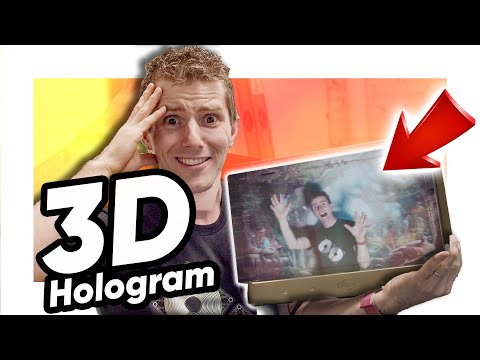
I could hardly believe my eyes! - Looking Glass Holographic Monitor
About this video
Linus Tech Tips reviews the Looking Glass 8K holographic display, a glasses-free 3D monitor. The video shows the display in action and explains how it works.
Why it appears in the archive
HN uses it as a reasonably detailed overview of Looking Glass tech, including a segment showing the pixel mapping behind the 3D effect.
AI-generated summary and labels from the source dataset; verify important details against the video. Source & credits.
From the Hacker News discussion
It looks like their kickstarter has all the info: [LINK] Linus did a decent review of the tech back in 2019: [VIDEO]
Read original comment ↗Like other people have said, this looks like a Looking Glass dev unit or something. And here's a Linus Tech Tips video of it: [VIDEO] They have some good footage (though obviously it's setup as a hype reel too). Edit: Skip to follow for "beauty shots": 4:45 and 8:50. 6:12 for funky shot of the 'flattened' image to give you a sense of what 'trick' they're playing
Read original comment ↗Linus Tech Tips covered them before that gives a pretty good overview [0]. It's a really cool tech and I hope it becomes more affordable in the future. I'd imagine actually feeling like a person is physically present will make Zoom meetings and such a lot less boring. [0] [VIDEO]
Read original comment ↗Yeah, that's not remotely accurate. 45 angles for each pixel: [VIDEO] That's far more complicated than a lenticular sheet glued to LCD.
Read original comment ↗(Edited) The frog was on the low-res developer device. The much larger “8k” version introduced half way through [VIDEO] has some good tech detail, with the raw pixel mapping shown at 6:30. Calcs seem about right since raw pixel count was stated as 43 million, although it was implied elsewhere they split RGB sub pixels too (which sounds wrong I admit), so maybe 43 million divided by 15? Our eyes are more sensitive to luminance than colour, so maybe they did something there (however, not that I could see from the raw pixel mapping at 6:30).
Read original comment ↗That’s wrong: technically it is nothing like the vertical grated sheet you see on cheap 3D posters etc. At 6 min 30 in [VIDEO] they show the pixel sub mapping - and it isn’t just vertical bars. Edit: If they used a vertical grated sheet, there should be vertical lines at high contrast edges at a 45 pixel pitch. look at the green book at 6:22 and close-up at 6:27, and there seems to be vertical smear (not just what you might expect from horizontal smear). Example of a 3D lenticular print without the lenses to compare against: [LINK] from [LINK]
Read original comment ↗Interesting to see the 'modified' image before it's put on the display( [VIDEO] ) Seems similar to how pixel art worked, and tricks artists used to get a better image with CRTs. [LINK]
Read original comment ↗Looks like a useful step towards 3D displays. By stacking a bunch of these transparent panels on top of each other, you could display 3D objects without needing 3D glasses: ----o----- Layer1 ---o-o---- Layer2 ---o-o---- Layer3 ----o----- Layer4 (etc) The depth resolution would be kind of crap, but there'd probably still be uses for it. Maybe layers wrapped as cylinders? Pretty sure there's an existing crowd trying something like this a few years ago: [VIDEO] They're taking a different approach, though using a stack of panels too. --- That crowd is still around: [LINK]
Read original comment ↗