 HackerTube.runGood videos, with context.
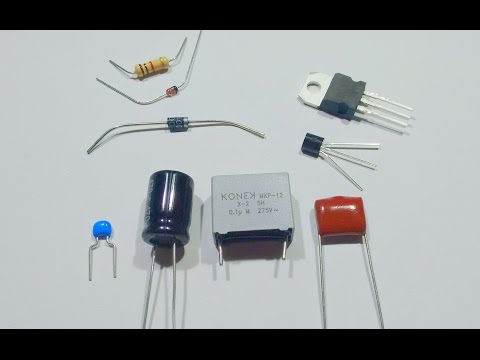
A simple guide to electronic components.
About this video
Big Clive gives a 38-minute beginner's guide to identifying common electronic components and what they do. He keeps the maths minimal and aims to fill gaps for people just starting out.
Why it appears in the archive
Suggested as a gentle starting point for beginners in electronics.
AI-generated summary and labels from the source dataset; verify important details against the video. Source & credits.
From the Hacker News discussion
EEVblog or mikeselectricstuff might have videos like that as far as I remember. I know bigclivedotcom does for sure. [VIDEO]
Read original comment ↗This is very good but before throwing people off the deep end I'd suggest this overview (origin of the dx7 & fm synthesis): [LINK] And then some bigclivedotcom to get going: [VIDEO] EEVblog for intermediate beginner stuff / home gamer lab gear: [LINK] And finally some Marco Reps for advanced beginners: [LINK] Just to dip your toe in.
Read original comment ↗I fully agree with the sibling comment to just buy a starter kit and start screwing around. I would add that the cost of failure is very low, so do not be afraid to experiment. At least for me this is the best way to learn. Worst case you fry the Arduino and need to order another one (or just order two or three spares so you don't need to wait, once you get going you might/will find uses for them). I have mostly fried LEDs, because I forgot to limit their current (fancy way of saying: put a resistor in series, ballpark 300-1000 Ohm should be fine). Every time you break a component, try to figure out what went wrong so you slowly learn what not to do, but you also understand why you should not do that. And the reward of seeing something change in the real world, not just on a screen, is great, even if it is just blinking an LED for the first time. You will not get to this level of understanding with your first project, but you also do not build a high performance distributed system as your Hello World! project in a new framework/language. Start with simple things like the usual blinky. Then start blinking two LEDs. Then you can figure out how to blink 4 LEDs independently with only three pins. Use a button to toggle LEDs, use transistors to switch LEDs, use optocoupler to switch LEDs, read the position of a potentiometer via an ADC, shift the ADC value with a resistor in series/parallel, read multiple buttons via a single pin/ADC, control the brightness of an LED via PWM, cont
Read original comment ↗